
Case Study:
The Ocean Within
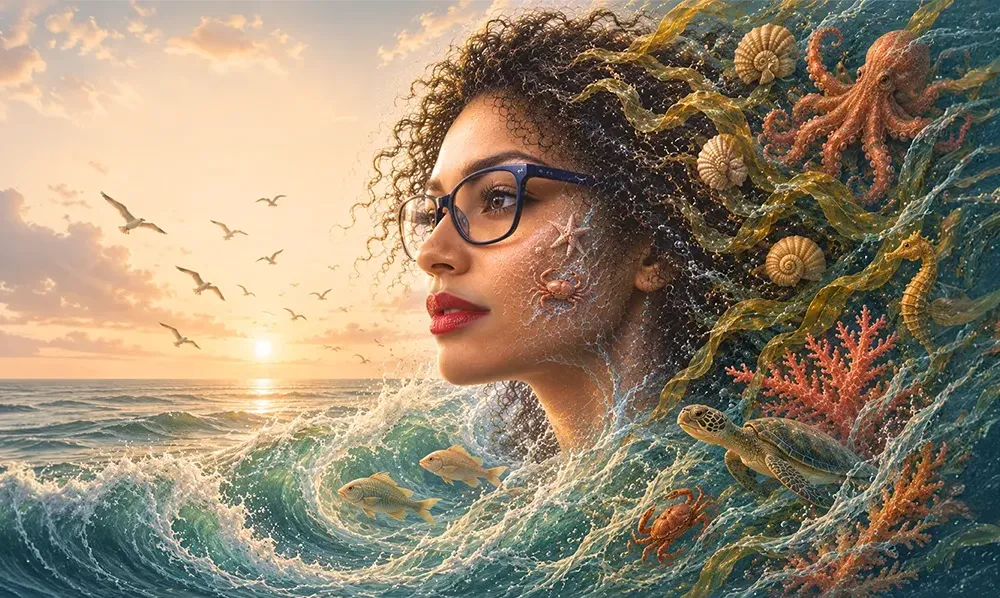
The Ocean Within
Exploring Emotion, Storytelling, and Creative Direction through AI-Assisted Illustration
Overview
It began with a single image saved from Pinterest and a quiet obsession: To watch a human form bloom outward, dissolving... Evolving into a surreal, organic landscape. What started as a study of likeness and stylistic composition, quickly unraveled into something larger: An exploration of identity, emotion, environment, storytelling, and creative interpretation.
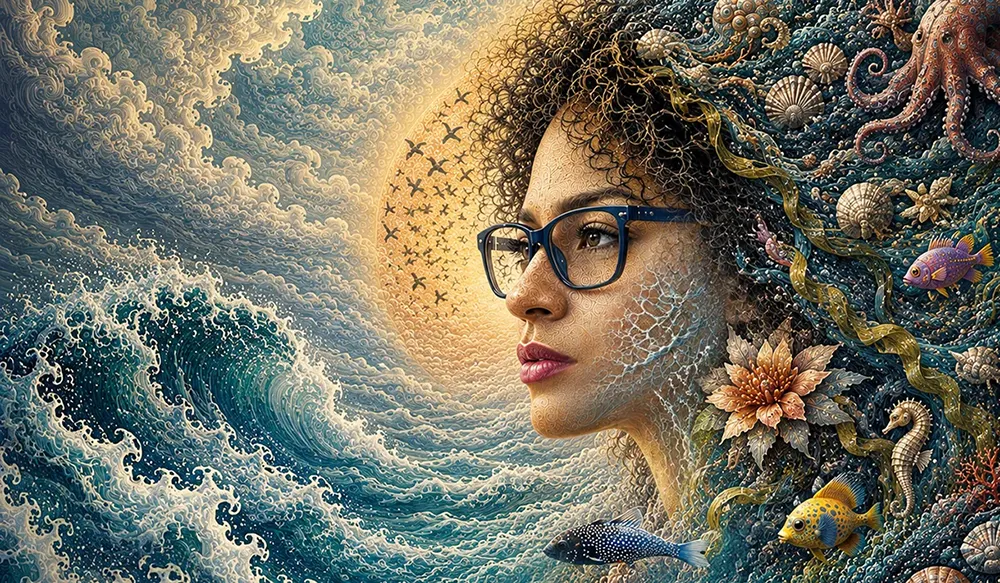
The initial piece captured what I had envisioned. I found myself in a vast, luminous landscape, where clouds drifted like whispered thoughts. Every shape breathed into the next, until edges lost meaning and the scene moved as one... a living tide.
I could have rested in that quiet, monochrome world. But I wondered what would awaken if I let color in.
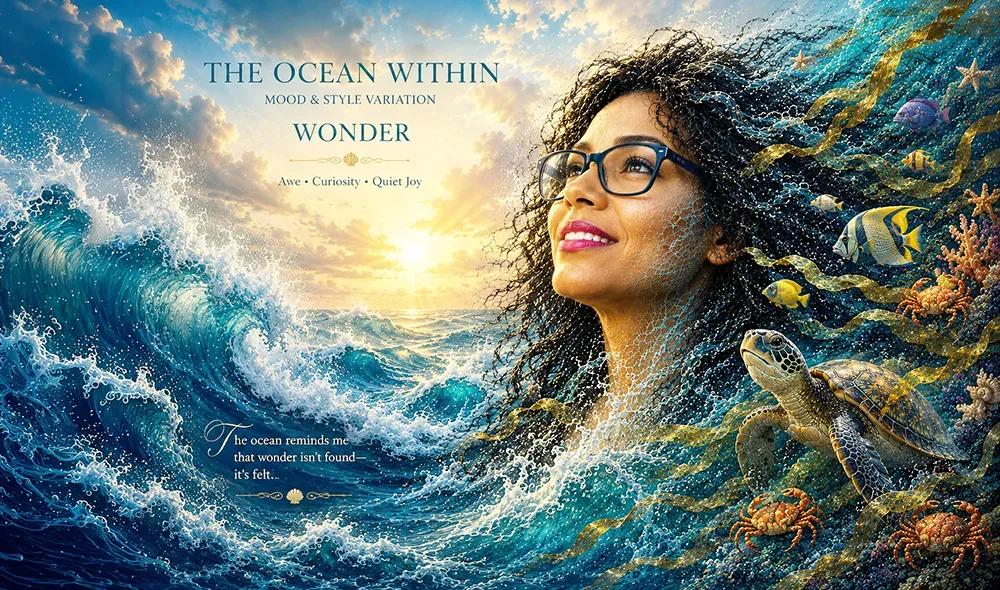
Blues merged with greens as the clouds heaved and became waves. Marine life embroidered the landscape. Light spilled along the horizon. The seam between sky and sea disappeared, folding into a single rhythm.
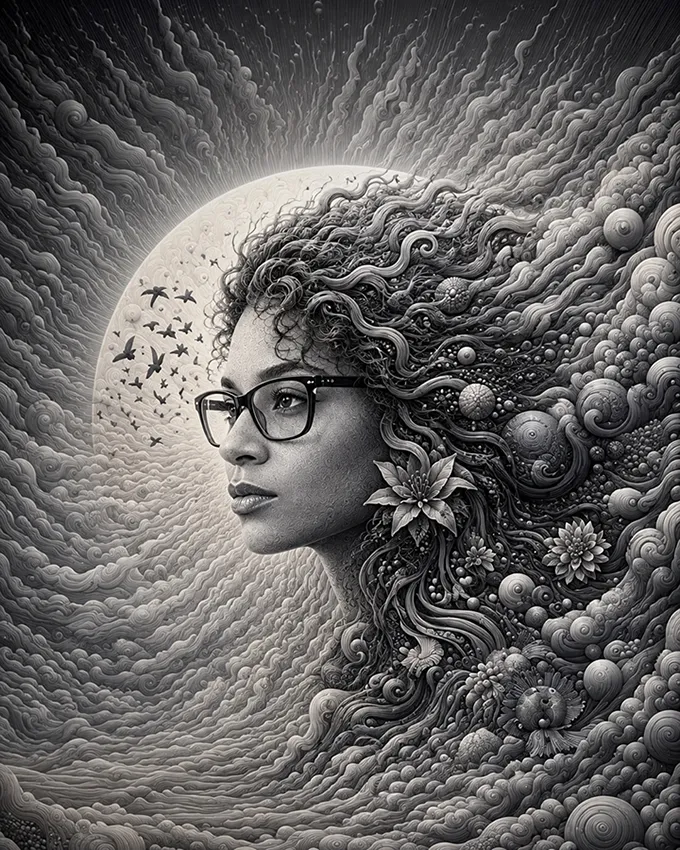
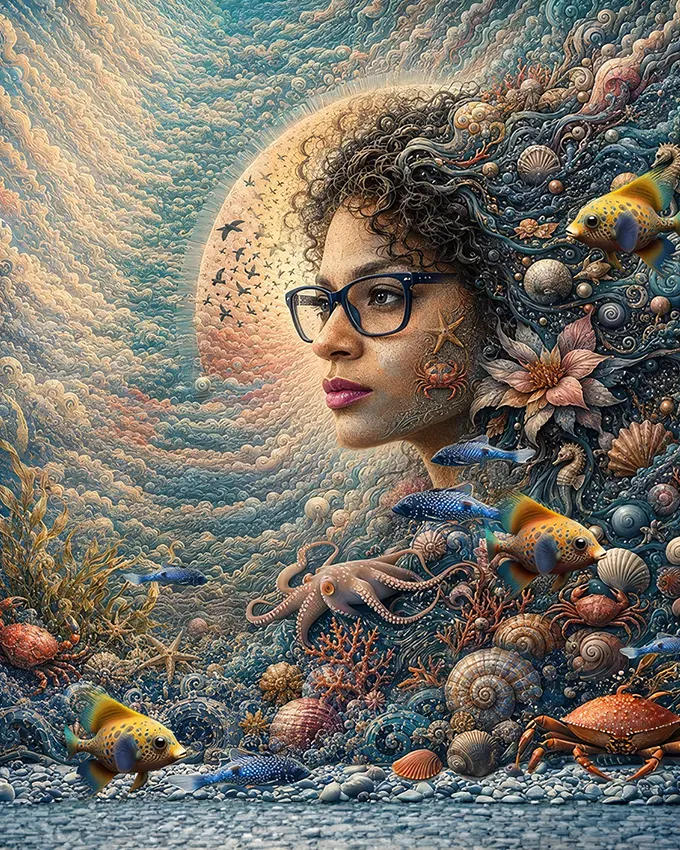
Click either image to view it at full size.
And somewhere in that rhythm, the ocean found me.
I could not leave it behind. Waves whispered through skin. Hair turned to seaweed. Water caressed my face as though it had always belonged there.
What began as a quiet fascination with one form giving birth to another grew into something vast, inevitable: Sky into sea. Sea into woman. Woman into ocean. All boundaries gone. All forms... flowing into one.
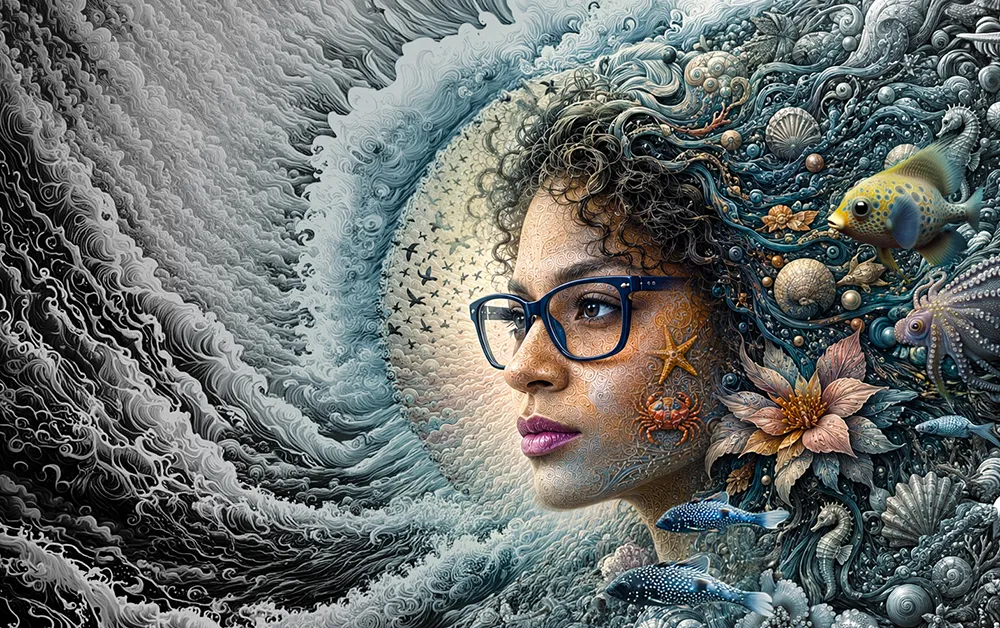
From there, the work evolved through three distinct visual directions: An ornate illustrative style, a more realistic cinematic-fantasy style, and a quieter, more refined series built around minimalism, negative space, and subtle emotional expression. The project ultimately became a study in how the same visual language could communicate optimism, passion, creativity, joy, determination, melancholy, serenity, and anger.
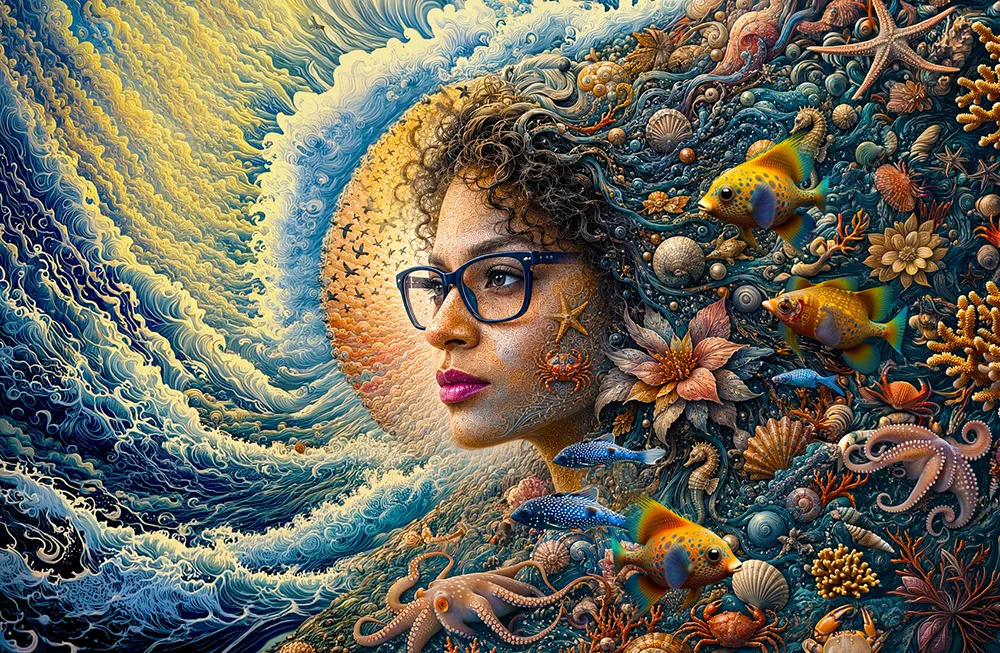
The Challenge
ChatGPT image generation can produce beautiful imagery quickly, but beauty alone was not enough. The greater challenge was maintaining authorship across repeated iterations. Facial features drifted. Skin tone shifted. Rendering styles competed with one another. Waves became decorative instead of believable. Marine life appeared pasted into the scene. Texture accumulated without purpose, and the image model repeatedly confused detail with quality.
I wanted the work to feel as though it had been created by one artist, in one visual language, during one continuous session. Every element needed to support the same story. The face had to remain recognizably mine. The ocean had to feel inseparable from the subject. Even the busiest compositions needed clear hierarchy, directional flow, and room for the eye to rest.
The challenge became larger than producing a successful image: Could I direct an unpredictable tool (ChatGPT) with enough discipline to create a cohesive body of work that felt emotionally intentional, visually unified, and unmistakably authored?
My Role
Creative Direction, Art Direction, Concept Development, Visual Storytelling, Composition, Color Direction, Environmental Narrative, Character and Likeness Development, Prompt Strategy, Iterative Critique, Image Selection, Photoshop Compositing, Retouching, and Series Development.
Tools & Workflow
ChatGPT Image Generation served as the primary environment for ideation, prompt development, iterative image generation, composition testing, and visual exploration. Rather than treating each output as finished artwork, I used the model as a creative production partner: Evaluating what worked, identifying what did not, and repeatedly redirecting the imagery toward a defined visual and emotional goal.
Adobe Photoshop was used throughout the finishing process for compositing, manual retouching, cleanup, color refinement, artifact removal, reconstruction, and selective use of Adobe Firefly's Generative Fill and Generative Expand. Some images required only light finishing; others were substantially rebuilt or refined after generation.
Human art direction remained the constant. Every image was judged against the same criteria: Likeness, composition, hierarchy, material realism, emotional clarity, integration, and narrative cohesion. The final series emerged through the combination of AI-assisted generation, traditional Photoshop craft, and continuous visual decision-making.
Creative Vision: A Tidal Mind
The ocean has always felt like home to me. Growing up in Trinidad & Tobago shaped my connection to warm sunlight, salt air, Caribbean breezes, breaking waves, and the constant movement of water. That lived experience influenced how the ocean needed to feel throughout the work. It could not be reduced to a decorative symbol or generic fantasy background.
As the project developed, I began thinking of the concept as a tidal mind. Ideas rarely arrive fully formed. They gather beneath the surface, build momentum, collide, recede, and return. Every wave changes the shoreline a little. The images visualize that process: Thought becomes current. Current becomes wave. Wave becomes environment. The ocean does not surround the subject. It flows from within her.
Design Challenges
Creating the series required solving the same problems repeatedly, often at a more demanding level with each new emotional direction.
The Journey
The project did not move forward in a straight line. It expanded through discovery, critique, disappointment, reconstruction, and repeated returns to the strongest ideas.
01. From Inspiration to Identity
The original Pinterest image provided the visual spark: A portrait seamlessly woven into an ornate cloud-inspired world. My first goal was to replace the anonymous face with my own while preserving the flowers, shells, birds, circular motif, and decorative flow that made the reference compelling.
Source Images: Pinterest image used as a stylistic reference, with personal photos provided to ChatGPT as likeness anchors for the Ocean Within series.
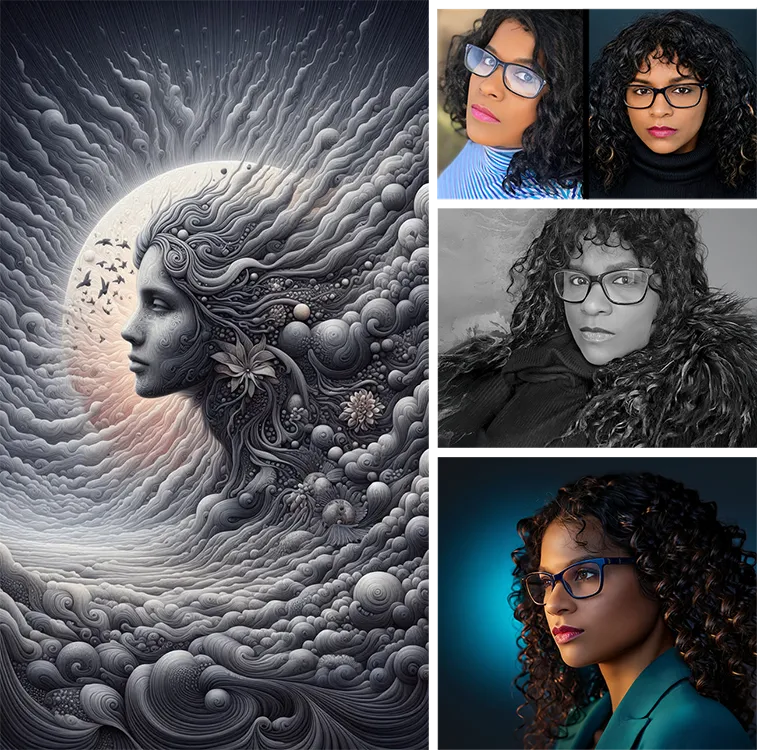
02. Establishing the Ocean Within
The first major breakthrough came when the portrait stopped sitting inside the composition and began transforming into it. Curls dissolved into currents. Shells nested naturally into the hair. A crab and starfish became small facial ornaments. The ocean began to read as part of the subject’s identity rather than a setting placed around her.
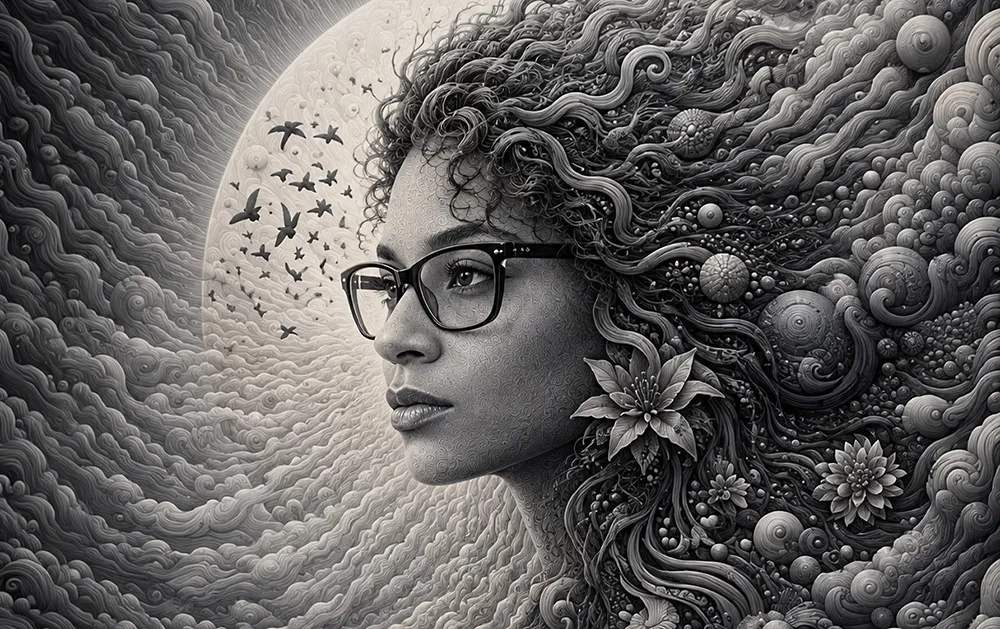
03. Moving from Illustration to Cinematic Fantasy
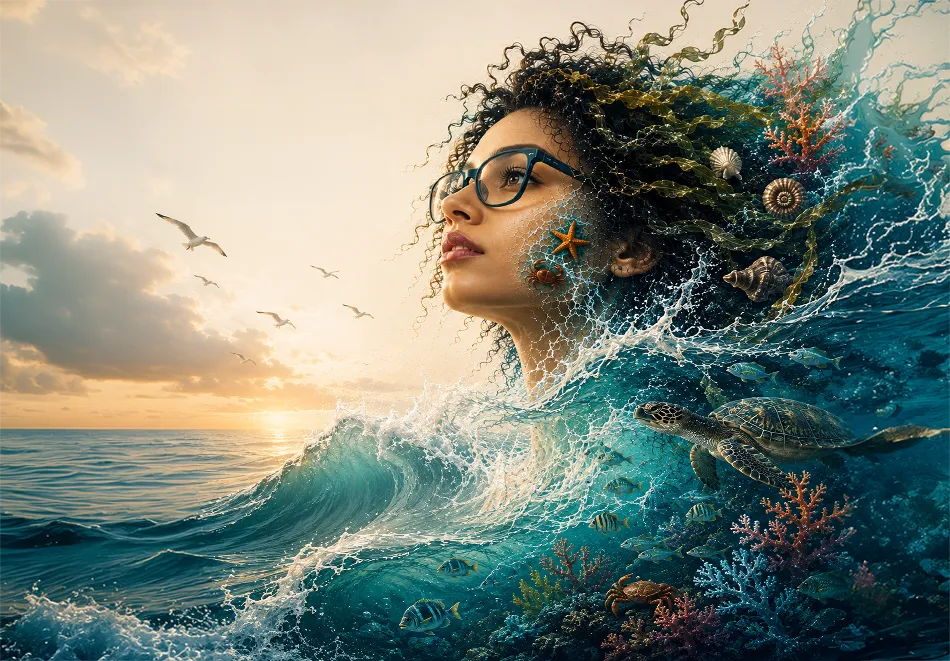
The ornate illustrative style opened the door to a more realistic direction. Waves became dimensional. Light became cinematic. Marine life gained a stronger sense of depth and place. The work began to resemble key art that could live on a film poster, romance or fantasy novel, editorial cover, or environmental campaign.
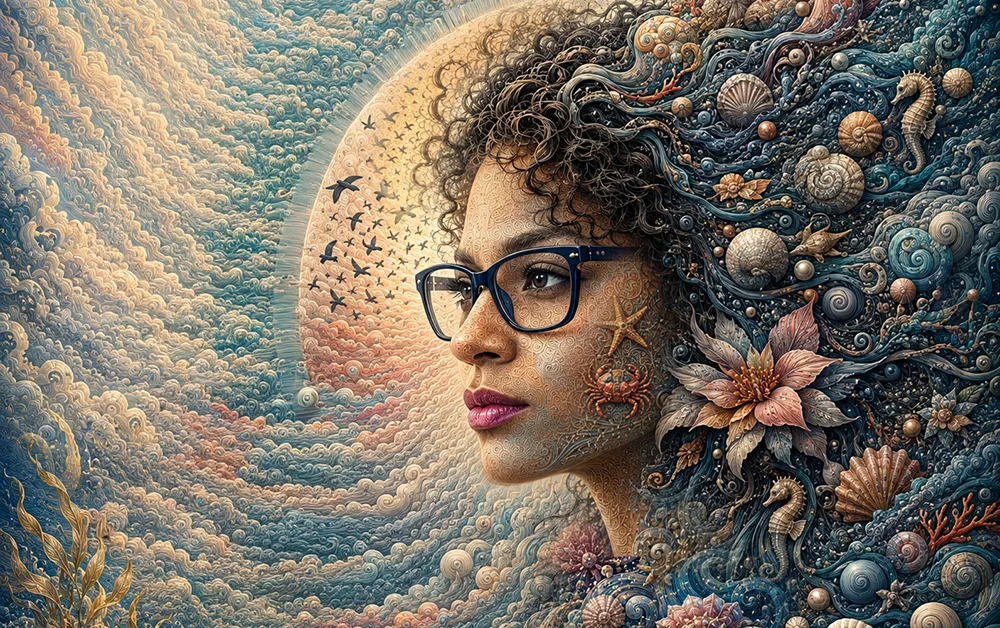
04. Directing Integration, Not Decoration
Some iterations were visually appealing but still failed the concept, while others simply moved away from the direction altogether. The model often added more detail when the image needed less, filling the composition with shells, fish, coral, flowers, spray, and texture until the focal point and hierarchy began to disappear. At other times, kelp sat on top of the hair, marine life looked pasted into the scene, waves struck the body instead of emerging from it, or realistic sea creatures became toy-like and stylistically disconnected.
I repeatedly redirected the work toward restraint, believable material behavior, and gradual transitions. The goal was not to decorate the portrait with ocean imagery, but to make one form evolve naturally into another: Skin into current, hair into kelp, kelp into reef, and reef into ocean.
05. Creating Emotional Landscapes
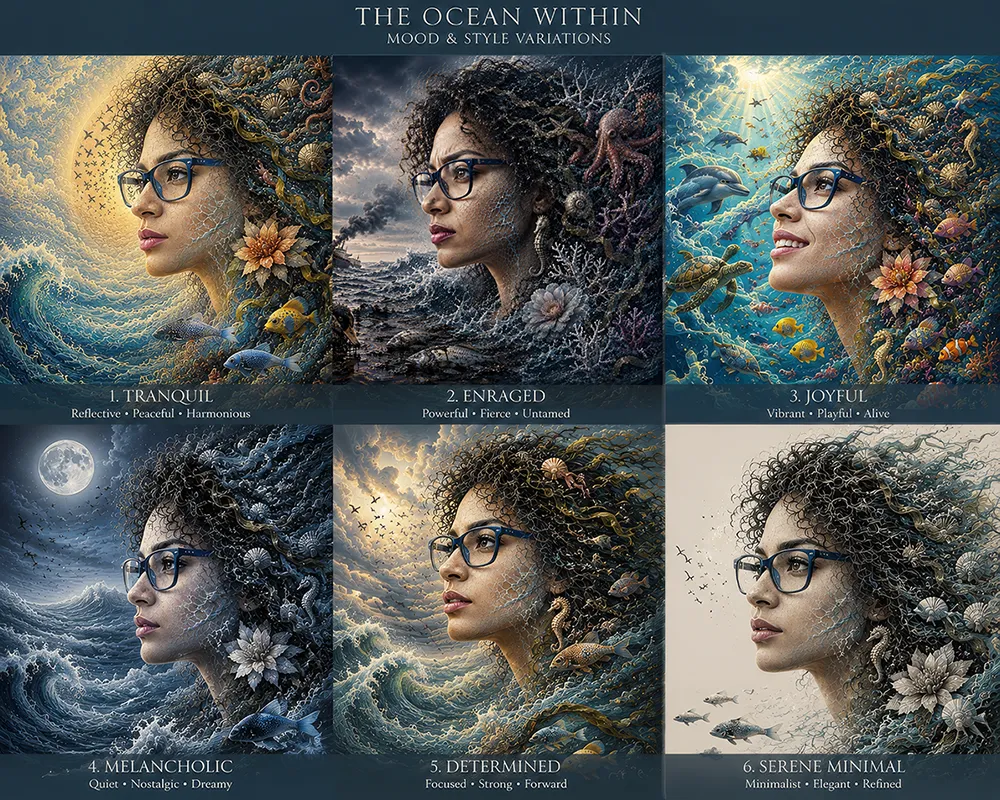
The series expanded when I stopped treating each image as a stylistic variation and began treating the ocean as an emotional language. The same character could inhabit different internal worlds. The face remained the anchor, while the water, weather, light, color, marine life, and negative space expressed the emotional state.
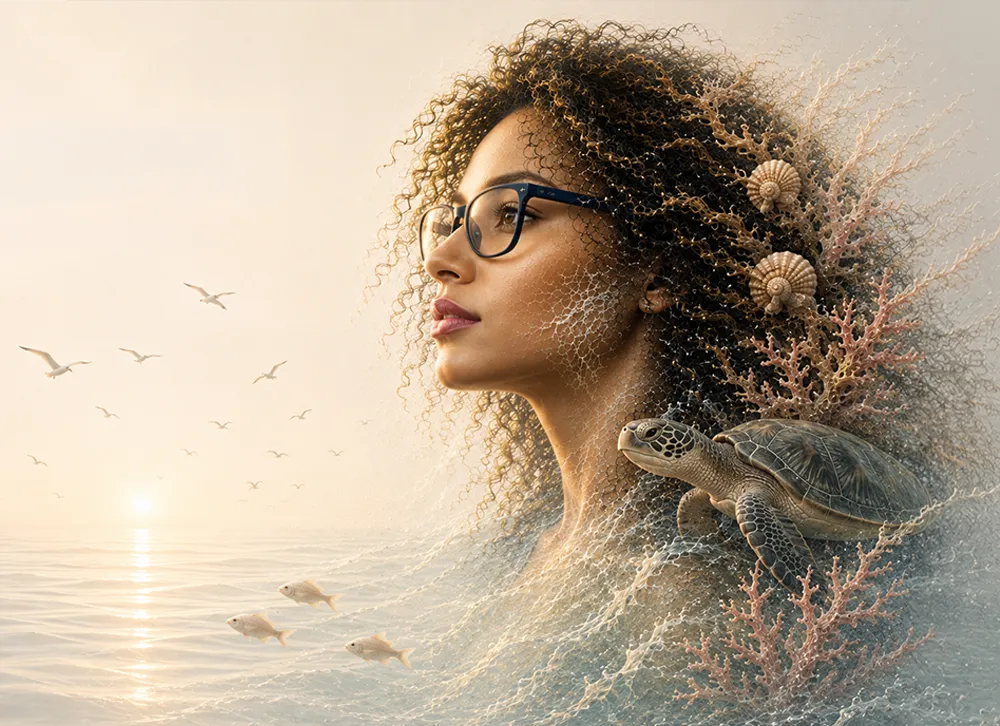
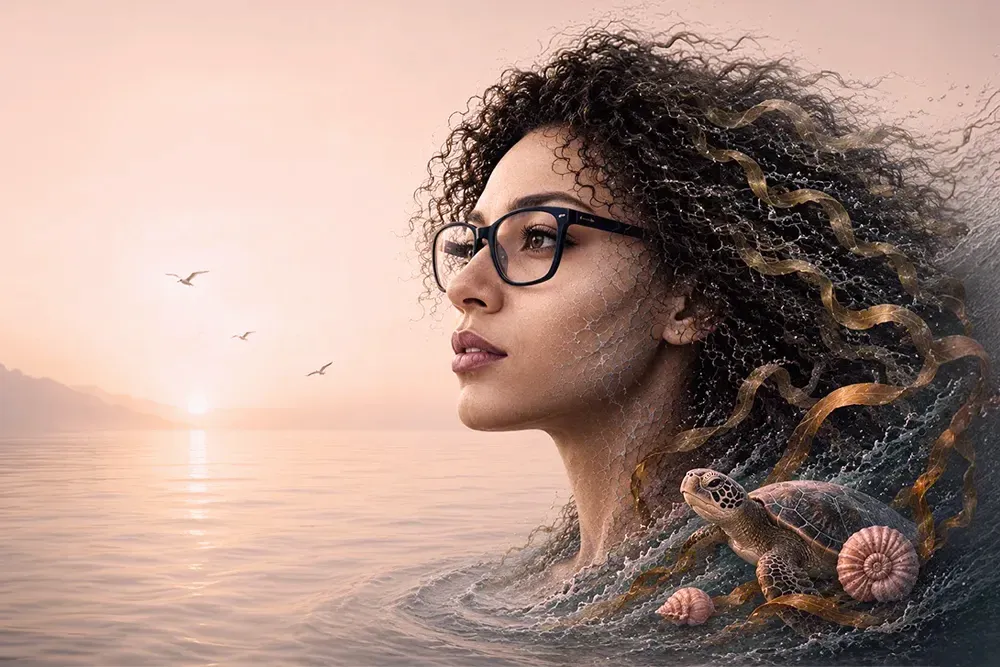
06. Discovering Quiet Elegance
The most unexpected direction emerged through restraint. Pale coral, soft water, muted blue-and-white palettes, and open backgrounds created images that felt refined and almost minimalist despite their underlying complexity. These quieter compositions became some of my favorites because they trusted subtlety, negative space, and seamless material transitions.
07. When Strong Images Disappeared
One of the most difficult moments came when two of the strongest compositions appeared briefly, moved me immediately, and then could not be recovered in their original form. Attempts to recreate them introduced the wrong aspect ratios, different expressions, weaker color, and more visual noise. The disappointment was real, but it clarified why the missing images had worked: Emotional clarity, elegant restraint, living Caribbean color, and a seamless sense that the subject was creating the water around her.
Rather than treating that loss as a dead end, I reverse engineered the qualities that had made those images successful and turned them into formal design principles for the series.
Reverse-Engineered Direction
This is a fine-art editorial series. Every image must feel quiet, intentional, and emotionally resonant. The artwork should evoke wonder before technical skill. Negative space is an active design element. The ocean and the subject are one living form, not adjacent objects. Hair gradually becomes kelp. Skin carries delicate currents beneath the surface. Waves behave like real water. Every shell, bird, fish, cloud, coral branch, and strand of seaweed must feel inevitable, never decorative. The composition must breathe. The face remains the emotional anchor. Do not add detail unless it strengthens emotion. Use clean, believable material textures with no random speckles, false cracks, granular overlays, or AI grit. Elegance always takes precedence over spectacle.
Teaching the Model Through Art Direction
Great images did not happen by accident. Throughout the project, ChatGPT often produced visually interesting results that missed the creative objective. Each iteration became an opportunity to evaluate what succeeded, identify what failed, and redirect the work using traditional design principles. The examples below show how art direction moved the imagery from technically impressive output toward a more intentional result.
Click any comparison image to view it at full size.
Editing for Less
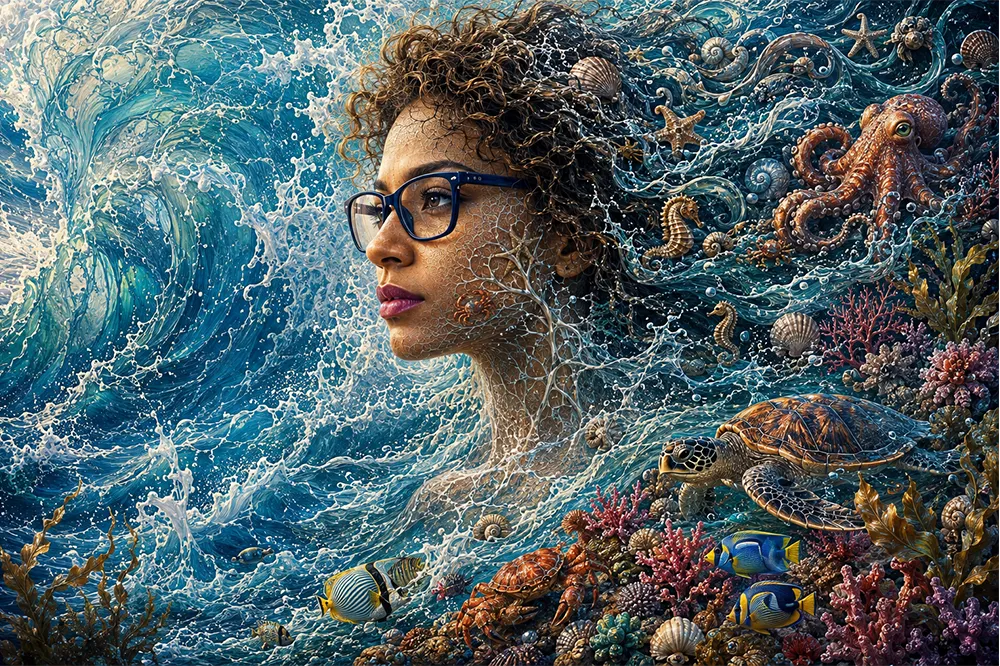
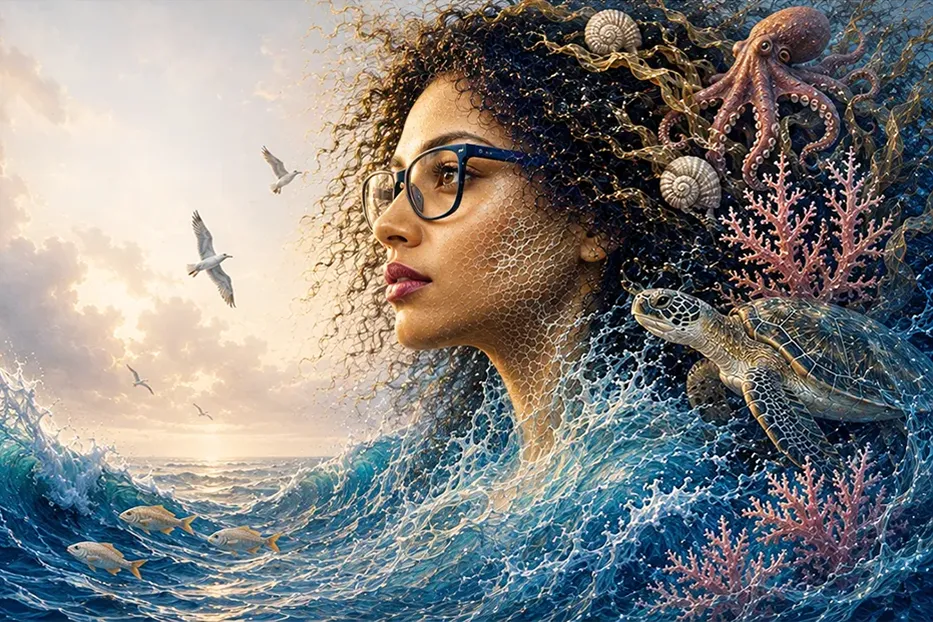
Challenge: The model repeatedly equated more detail with a stronger image, adding elements until hierarchy and breathing room began to disappear.
Art Direction: I simplified the composition, removed competing elements, and restored scale, negative space, and a clear focal point.
Result: A more readable image in which detail supports the emotional idea instead of overwhelming it.
Preserving Identity
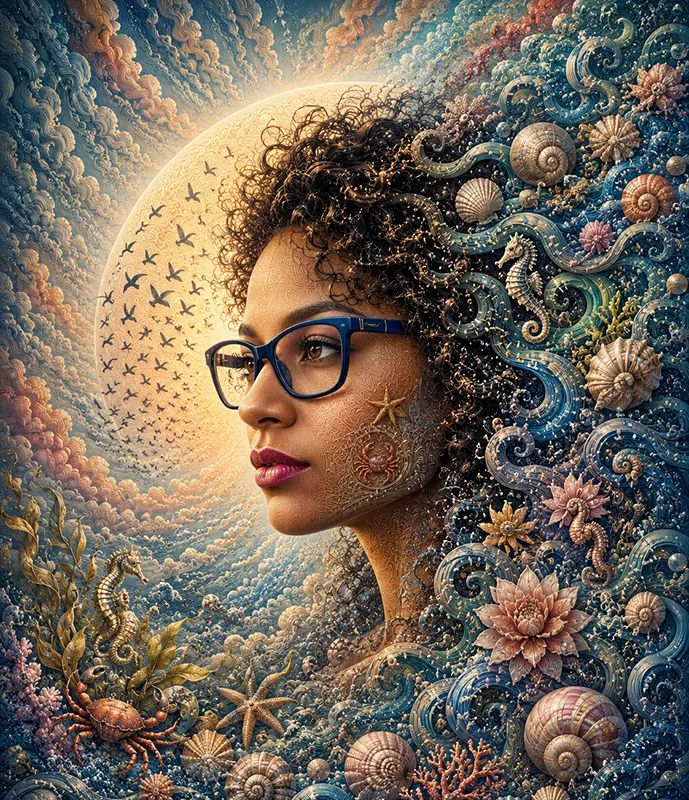
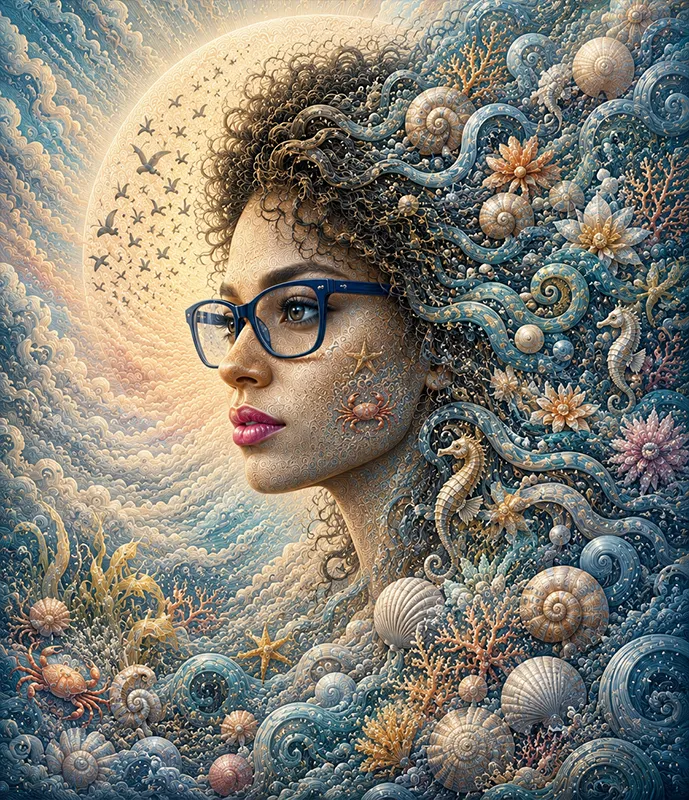
Challenge: Identity drift was not always dramatic from one generation to the next. It accumulated. Across successive revisions, complexion, facial structure, proportions, and other distinctive characteristics could gradually move toward a more generalized, idealized appearance. In my case, that often meant lighter skin, more conventionally Caucasian facial features, longer necks, smaller heads, fuller lips, and increasingly stylized female proportions.
Art Direction: I continually compared new generations against the original reference rather than the previous output, re-establishing likeness through reference images, prompt correction, image selection, and selective Photoshop refinement.
Result: A recognizable central identity that retained individual characteristics instead of allowing repeated generation to progressively standardize them.
Identity drift can compound quietly across iterations. If each new generation is judged only against the one immediately before it, small changes may appear acceptable. Returning periodically to the original identity anchor makes the accumulated drift much easier to detect and correct.
Integration, Not Decoration
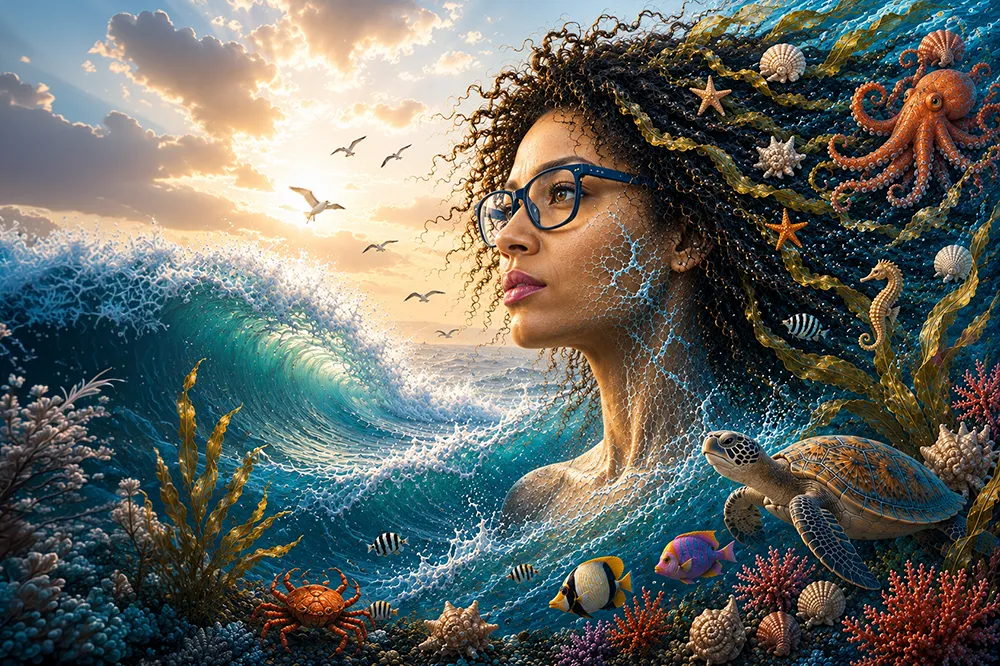
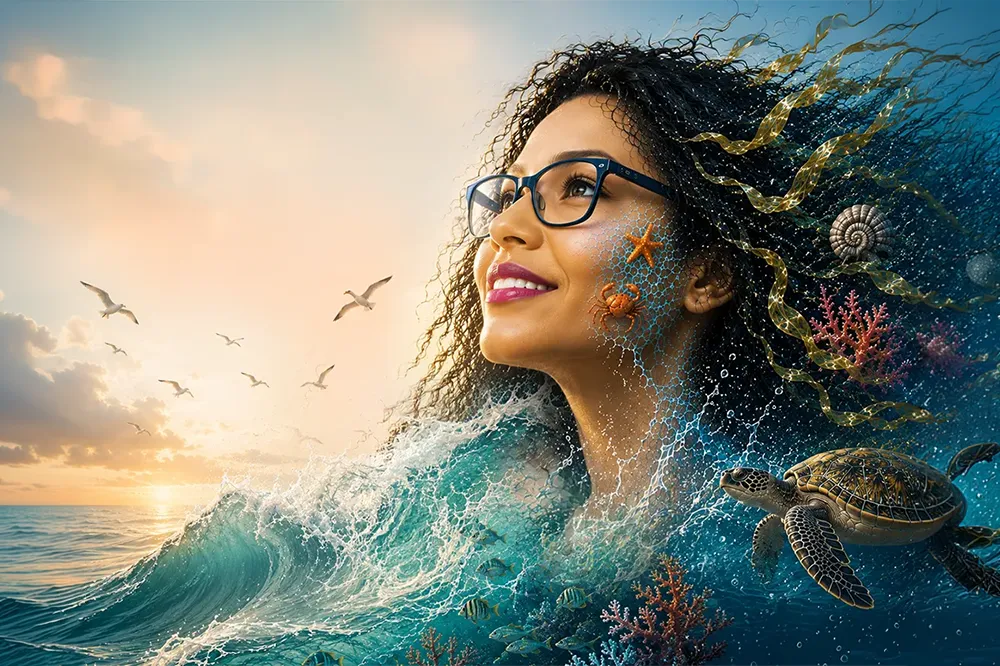
Challenge: Kelp, waves, coral, and sea life sometimes appeared placed on top of the portrait or shifted into an unrealistic, toy-like style.
Art Direction: I redirected the model toward gradual transitions, consistent material realism, and environmental elements that emerged naturally from the subject.
Result: A cohesive visual language in which the portrait and the ocean read as one living environment.
My work can be richly layered, and many of my Photoshop composites contain extensive detail. But complexity is not clutter. Even the busiest compositions maintain a clear focal point and a deliberate path for the eye. Every element earns its place.
What This Project Demonstrates
Design Principles for the Series
Wonder before spectacle. The image should move the viewer before it impresses them.
The ocean is not the setting. The subject and the environment are one living form.
Hierarchy before detail. The viewer should know where to look first, where to travel next, and where to rest.
Complexity is organized. Rich detail works only when scale, contrast, direction, and spacing keep the composition readable.
Nature does not decorate. Hair becomes kelp. Kelp becomes reef. Reef becomes current. One form evolves into another.
Emotion changes composition. Optimism needs openness. Passion needs momentum. Creativity needs emergence. Serenity needs silence. Melancholy needs tenderness. Anger needs controlled force.
Texture must describe material. Foam, coral, shell, skin, oil, sand, and water each require their own believable surface. Random grit is not detail.
Elegance requires softness and light. Refined work depends on clean transitions, selective contrast, and enough space for beauty to register.
Emotional Architecture
Each final image became a small emotional world with its own visual logic. The title and three descriptors identify the mood, while the composition explains it.
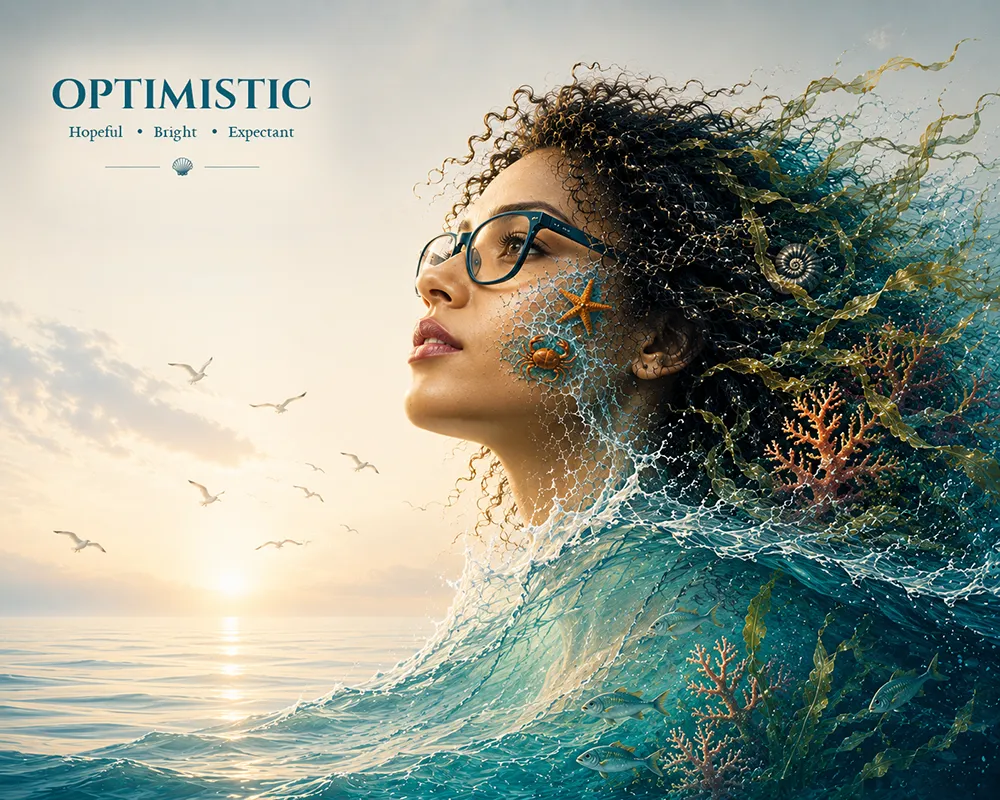
OPTIMISTIC
Hopeful • Bright • Expectant
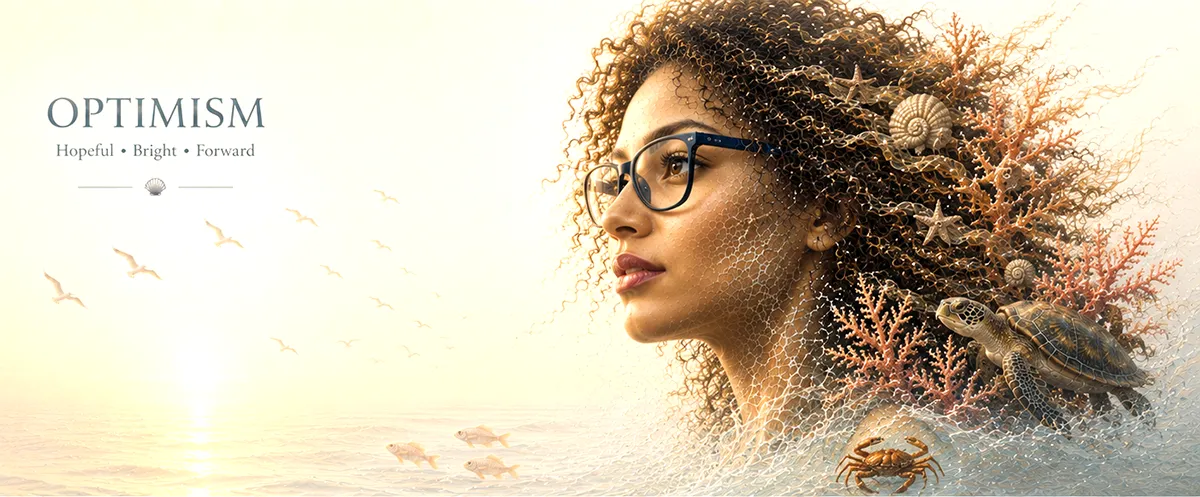
She turns toward the light without knowing exactly what lies beyond it. The ocean reflects possibility, each wave carrying the quiet promise of renewal. Nothing is forced. Nothing rushes. Optimism lives in the simple belief that tomorrow can become something better than today.
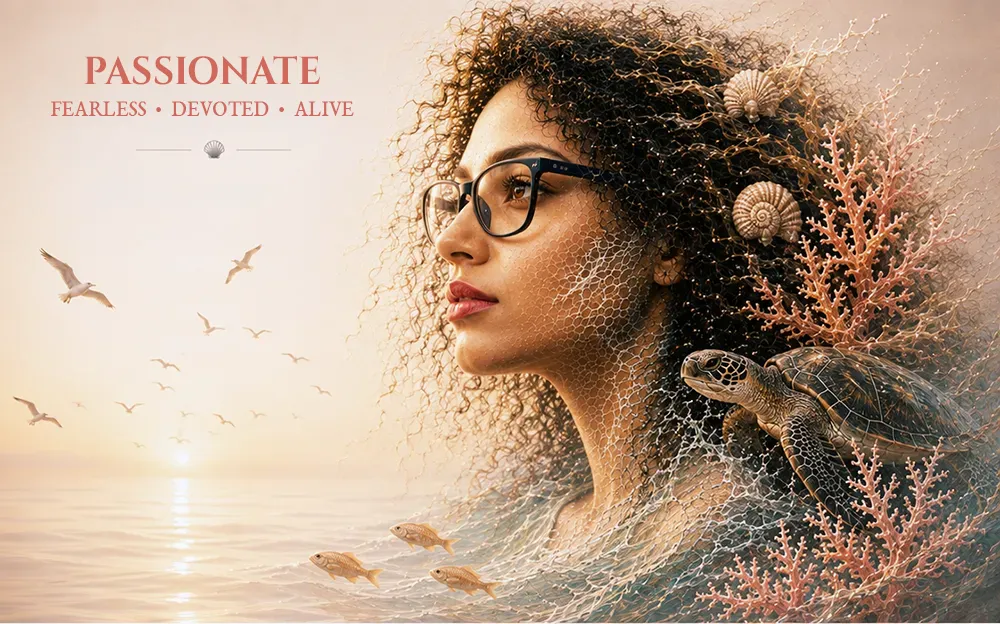
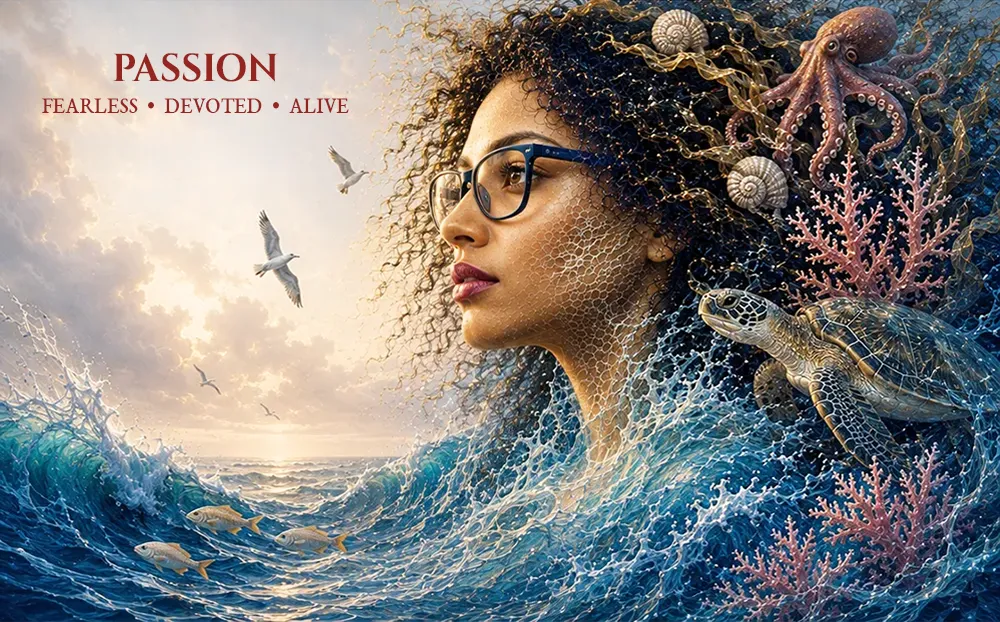
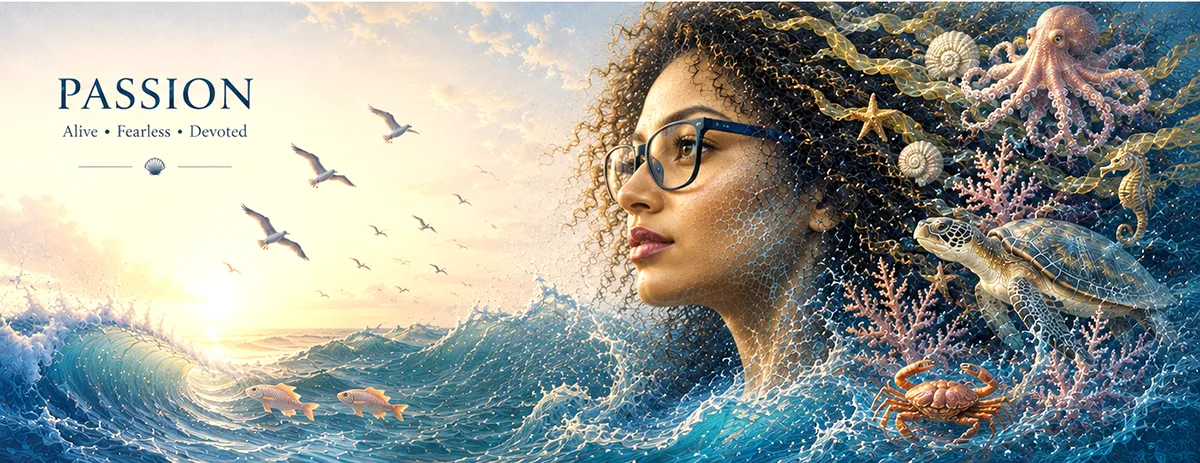
PASSION
Alive • Fearless • Devoted
Passion exists both beneath the surface and in full expression. In one image, it is controlled and concentrated: A steady, intense gaze, sun-warmed skin, and the quiet attention of the surrounding marine life suggest an inner fire that does not need spectacle to announce itself. In the other, that same force expands outward through stronger waves, richer Caribbean blues and teals, warmer light, and more energetic marine life. Whether contained or fully released, the ocean responds to her intensity. It is alive because she is alive within it.
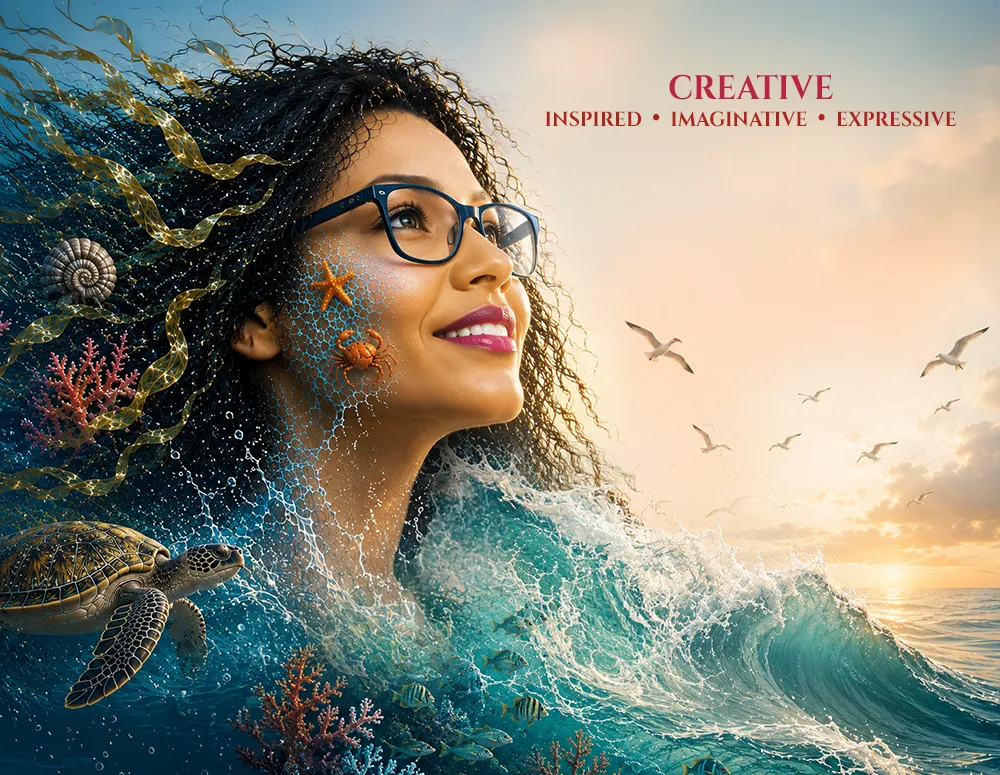
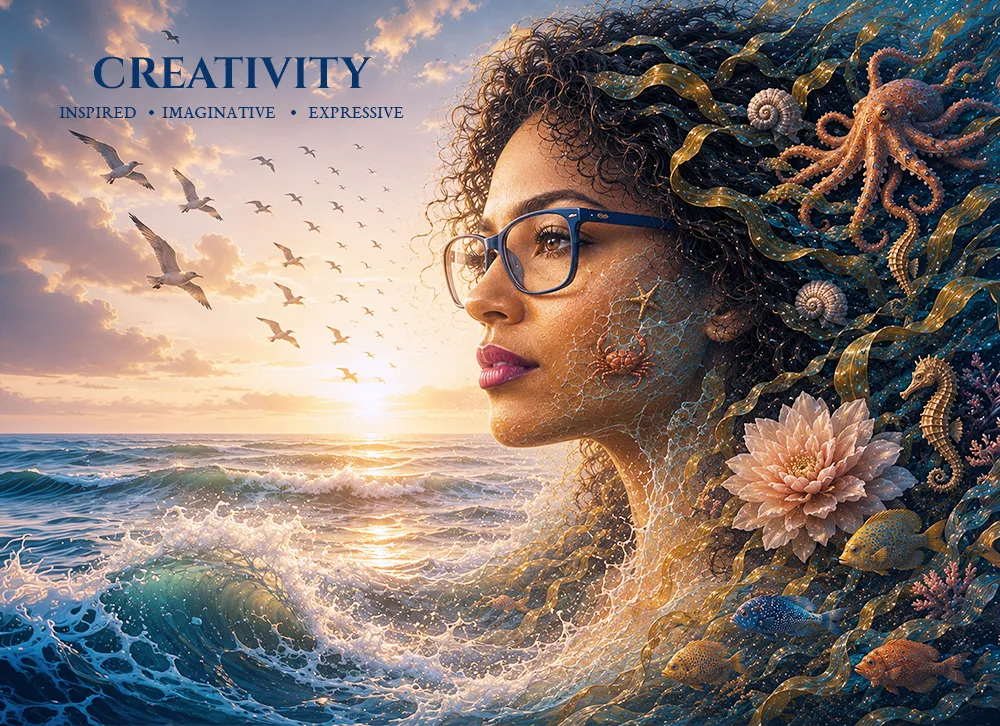
CREATIVITY
Inspired • Imaginative • Expressive
Creativity appears both in the act of making and in the quiet moment after creation. In the first image, currents emerge beneath the skin, hair extends into kelp, and waves release coral, fish, shells, and other forms into the surrounding world. The transformation is active and expressive, but every element follows a continuous flow. In the second, the energy is more restrained. She appears to survey what she has created with quiet satisfaction and careful attention, while the water settles into rhythm and the birds move in deliberate formation toward the light. One image captures creation in motion; the other captures the creator observing, refining, and making sure everything remains in its place.
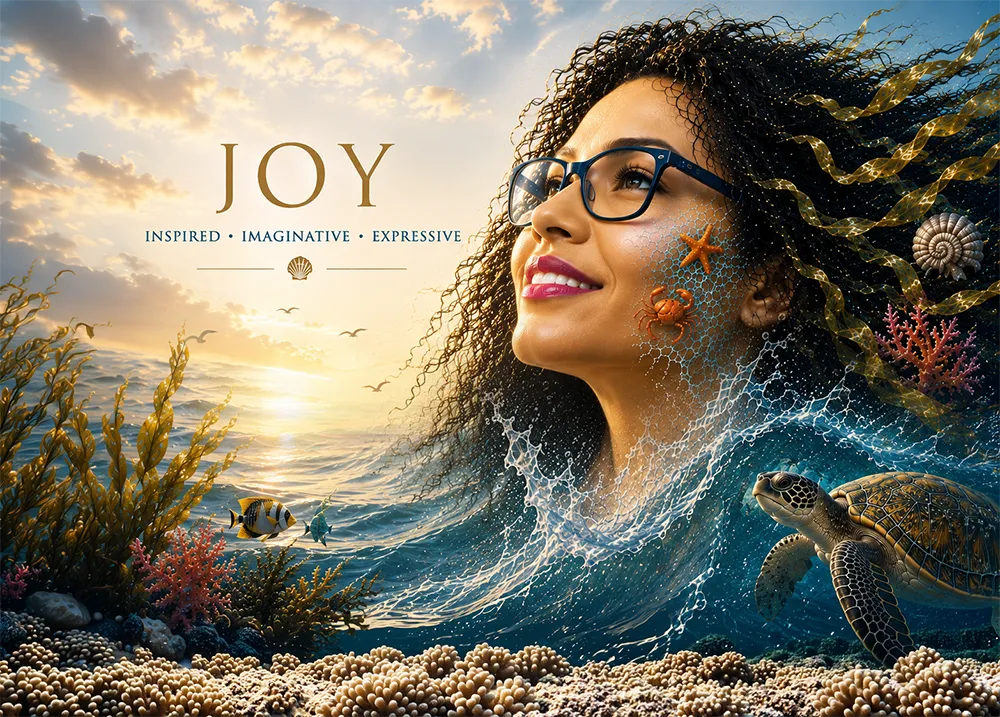
JOY
Radiant • Uplifting • Celebratory
Joy exists on a spectrum. Sometimes it is found in stillness and quiet gratitude. Other times it arrives as laughter, movement, and light. This image explores that more exuberant expression. A radiant smile, upward gaze, sunlit waves, and vibrant marine life transform the ocean into a living celebration. Rather than simply surrounding her, the sea seems to respond to her happiness, reflecting the idea that the inner emotional world can reshape the landscape around it.
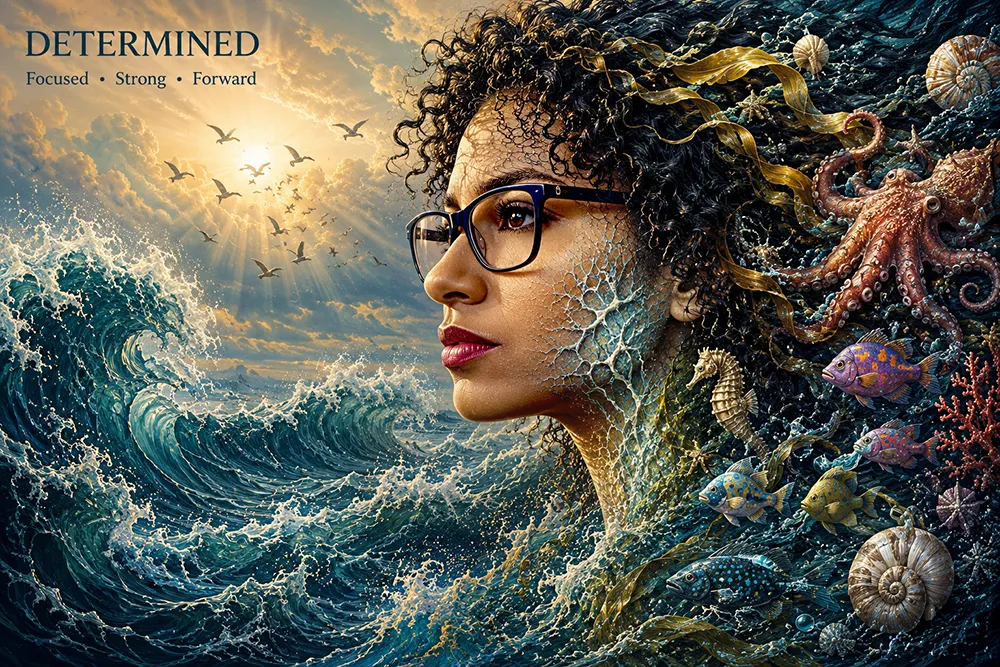
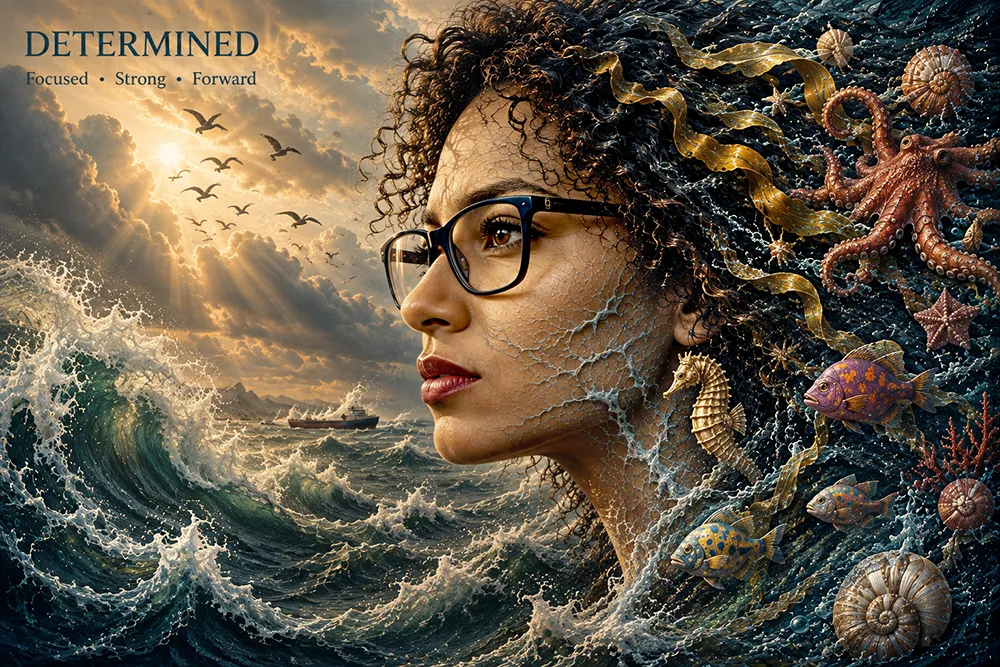
DETERMINATION
Focused • Strong • Forward
The storm exists, but it does not control her. Dense waves, directional birds, and a steady gaze create forward pressure. The image communicates conviction without relying on anger. Determination lives in the contrast between external force and internal calm.
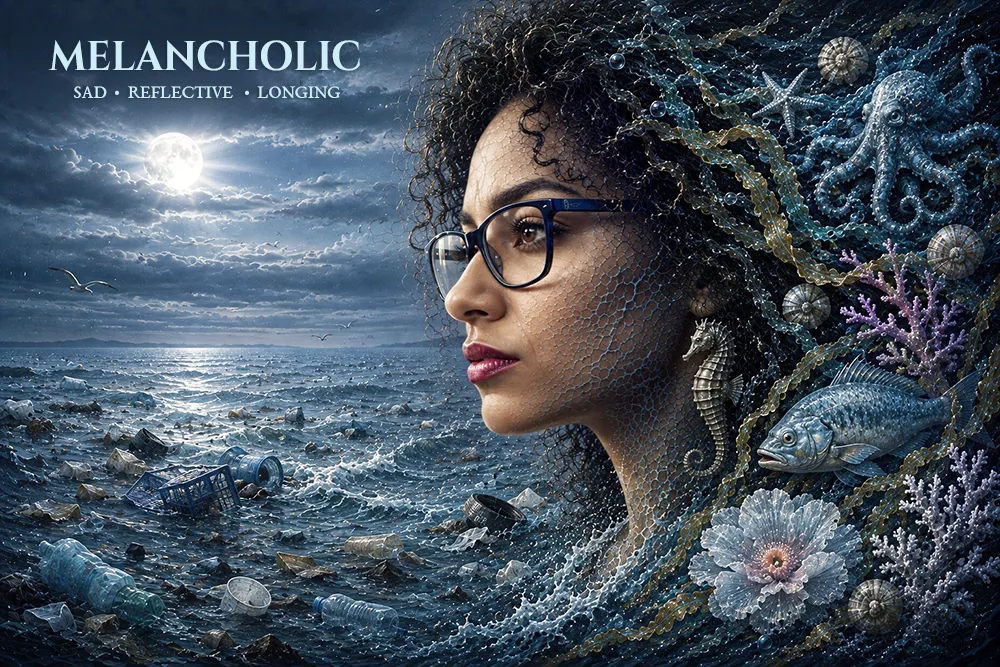
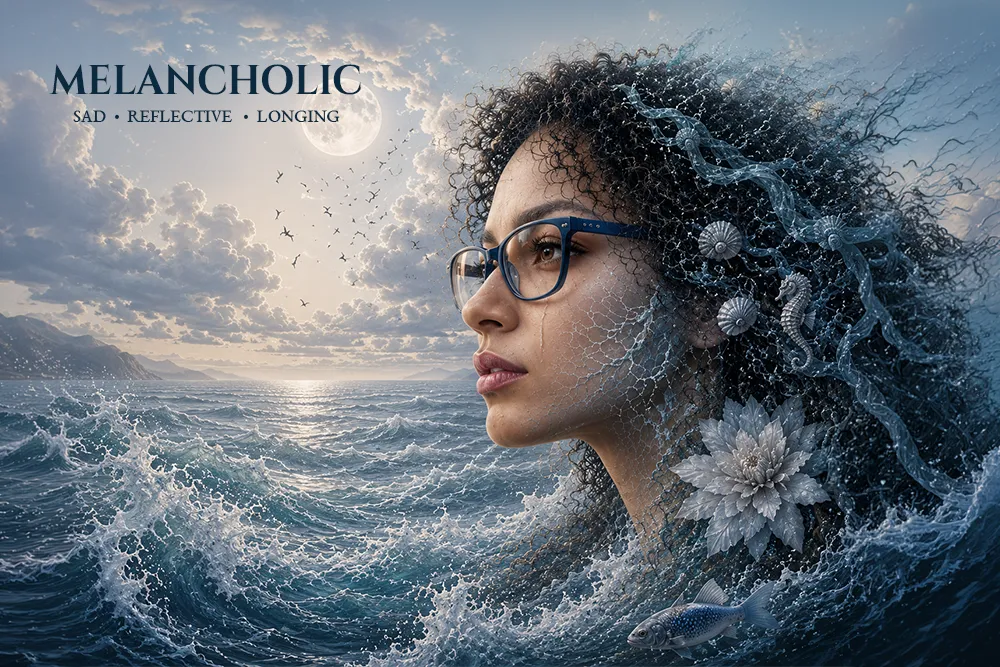
MELANCHOLIC
Sadness • Reflection • Longing
Melancholy became an environmental lament. Moonlit blues, white foam, a single tear, and ocean debris create sadness without collapsing into despair. Plastic waste and dead marine life remain visible, but the composition preserves beauty, dignity, and space for reflection.
SERENITY
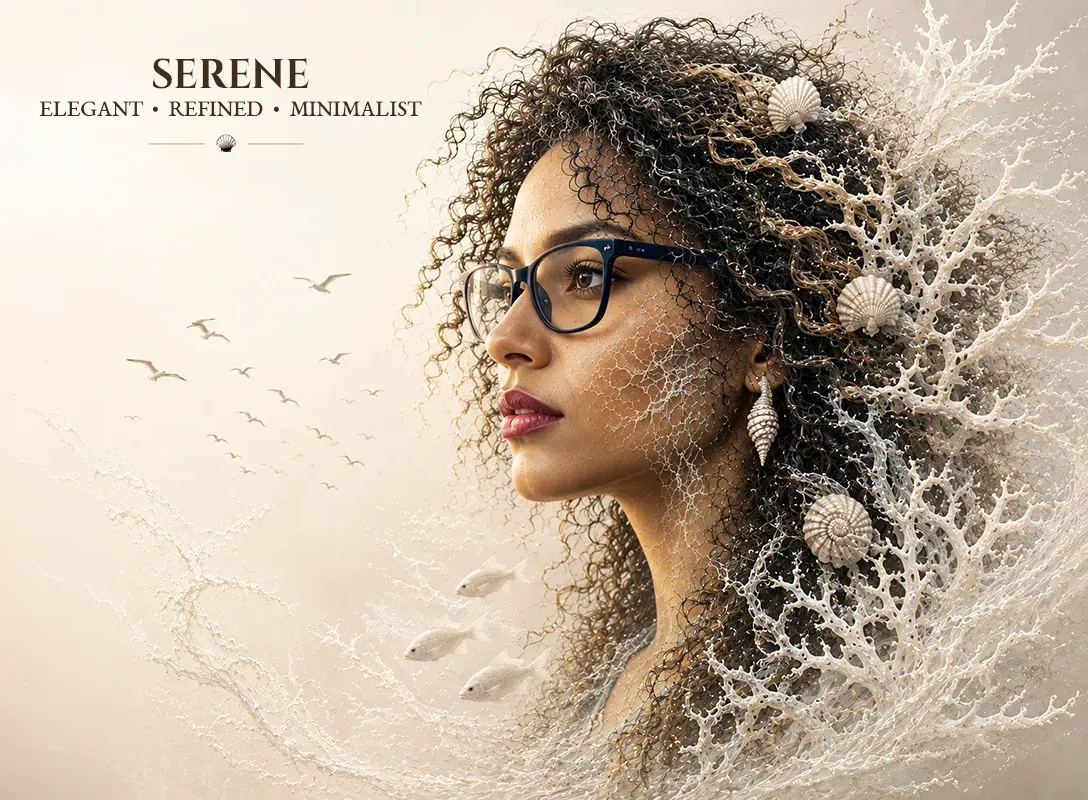
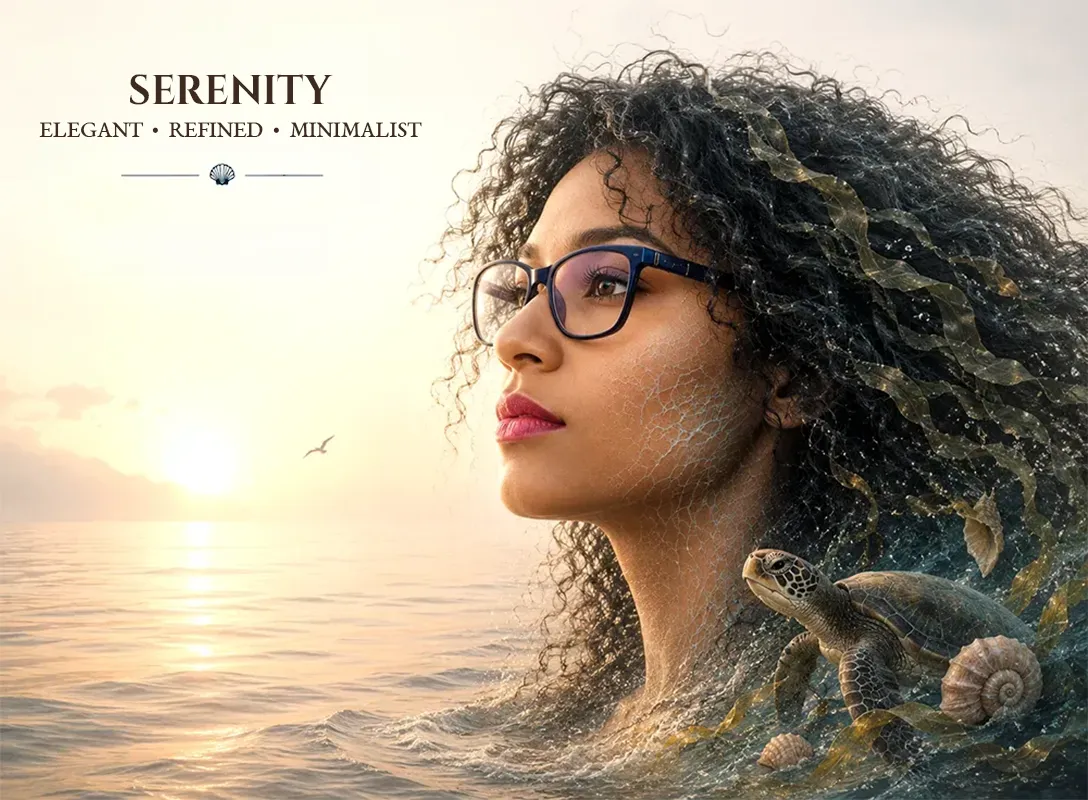
Elegant • Refined • Minimalist
Serenity uses the least to say the most. Soft ivory water, pale coral, muted color, delicate shells, and subtle fish create an almost under-the-surface elegance. The complexity is still present, but it has been quieted. The image invites the viewer to lean in rather than step back.
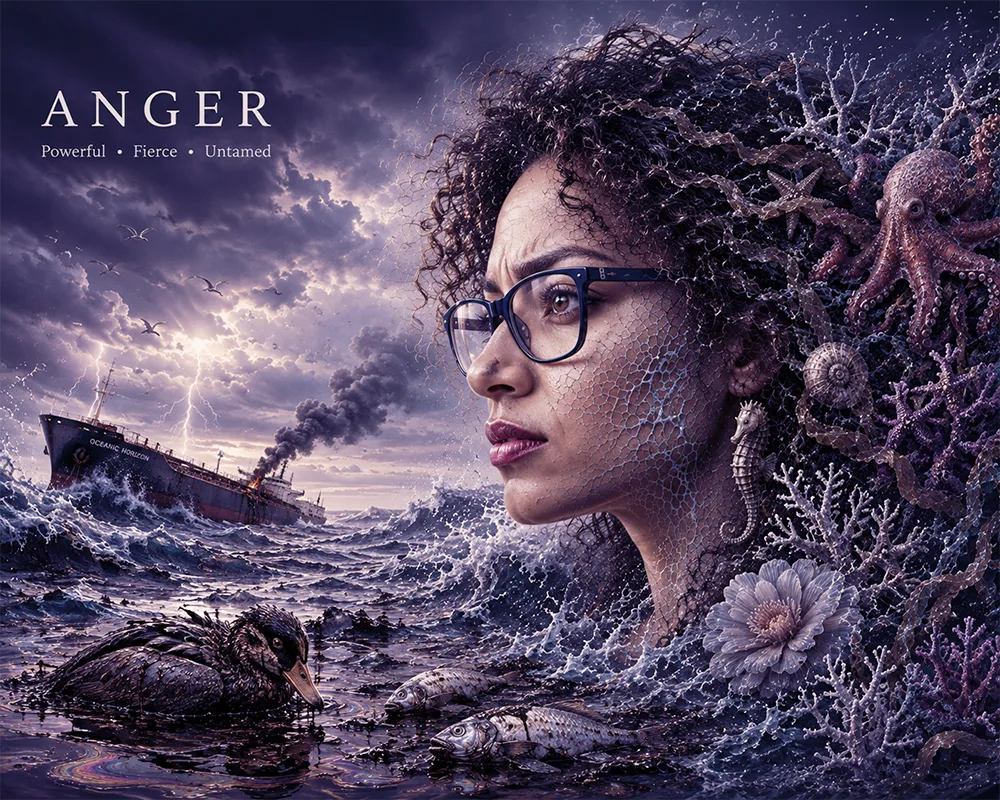
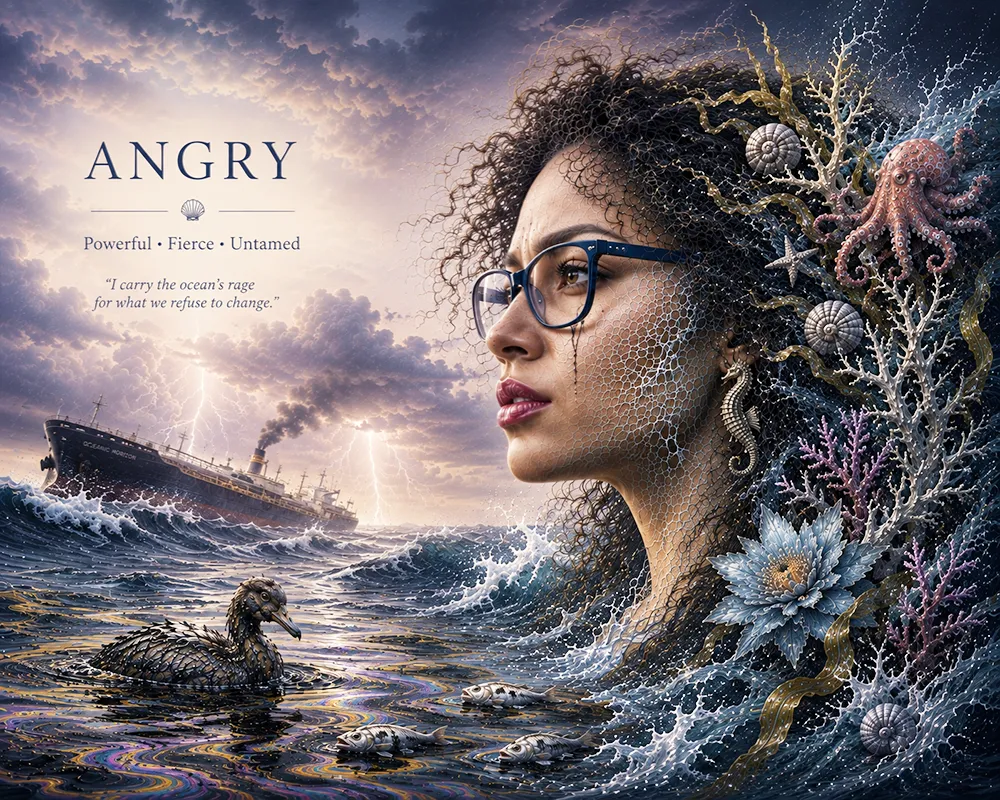
ANGER
Powerful • Fierce • Untamed
Anger is given a reason. A damaged oil tanker, oil-slicked water, dead fish, and affected wildlife transform the emotion into environmental outrage. Lightning, breaking waves, and horizontal storm clouds create controlled intensity while still leaving enough open sky for the eye to move through the scene.
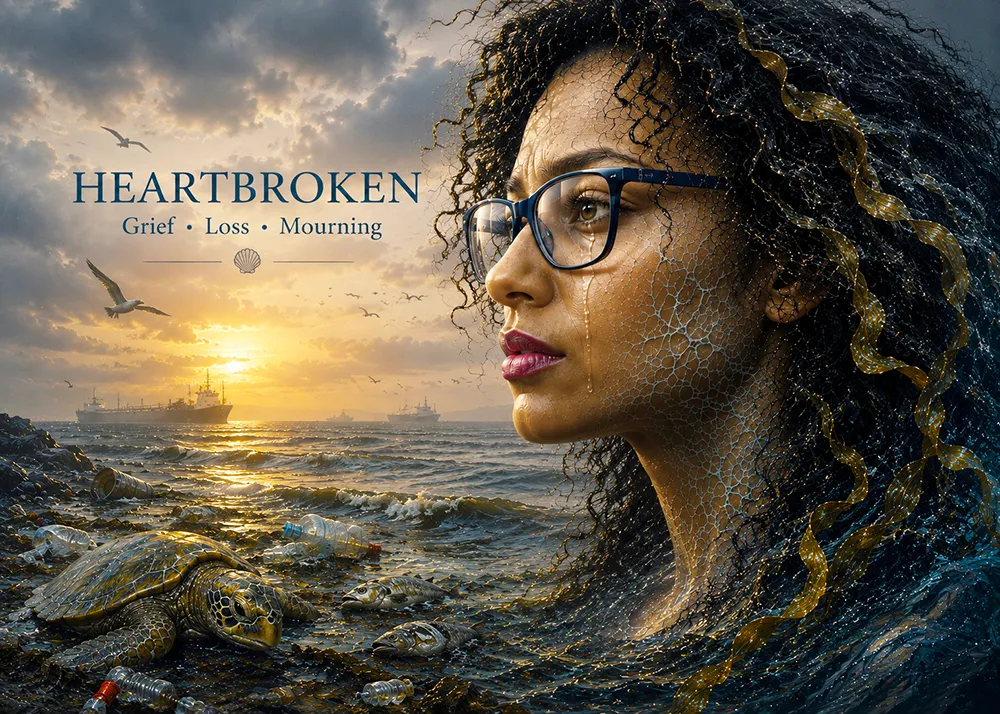
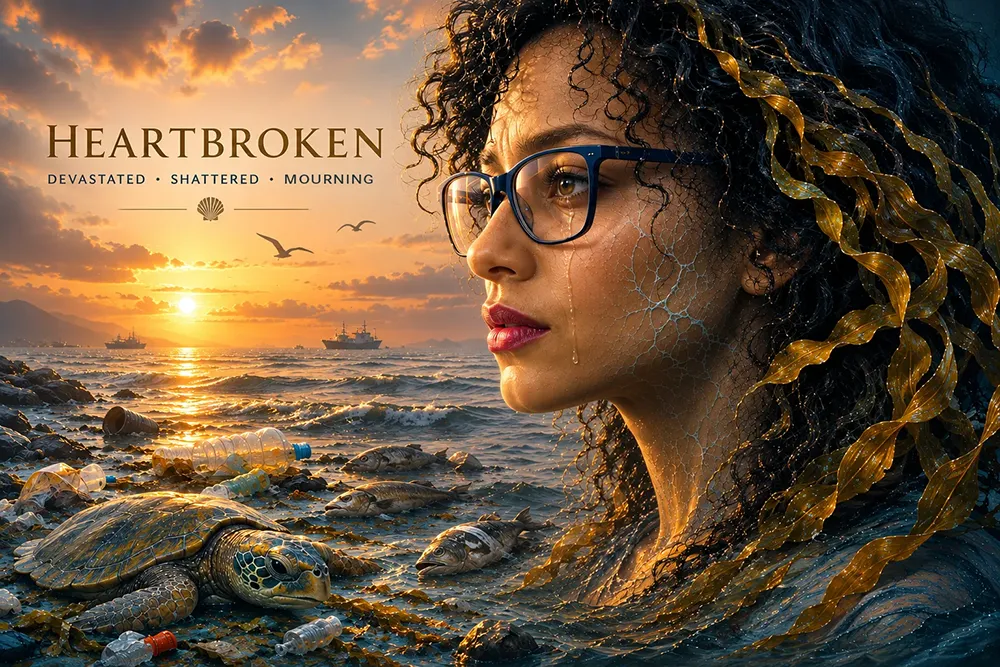
HEARTBROKEN
Grief • Loss • Mourning
Heartbroken: Beauty and tragedy often exist in the same moment. This piece explores that uncomfortable truth: that life continues, even while something precious is being lost. The woman is heartbroken by the environmental destruction she sees: The turtle is dying. The fish are dead. Plastic is washing ashore. She's crying. Nothing in the environment is acknowledging her grief. The sky is beautiful. The light is extraordinary. The tide still comes in. Nature, from a distance, still looks magnificent, as the sun sets with all its resplendent beauty. The world doesn't pause to acknowledge grief..
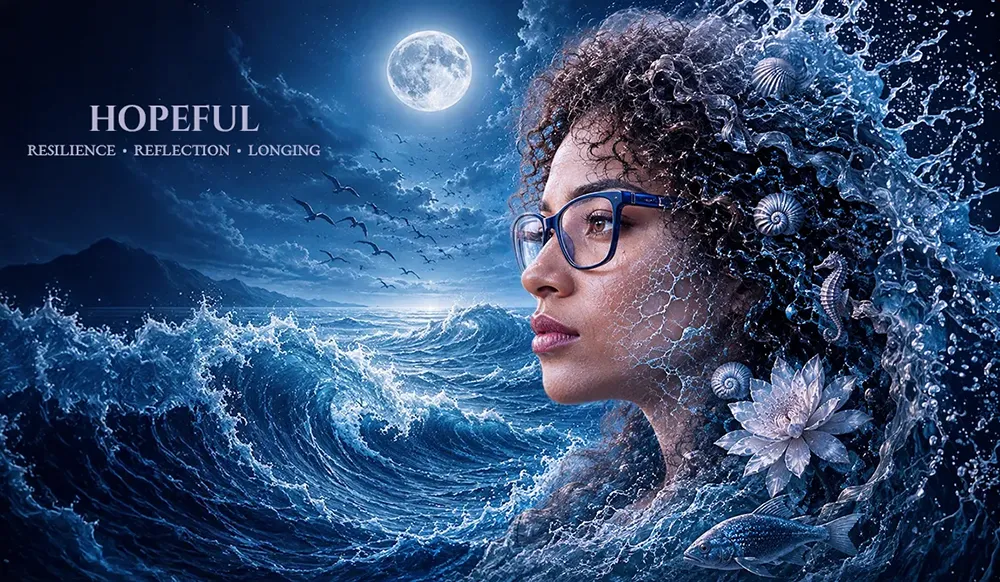
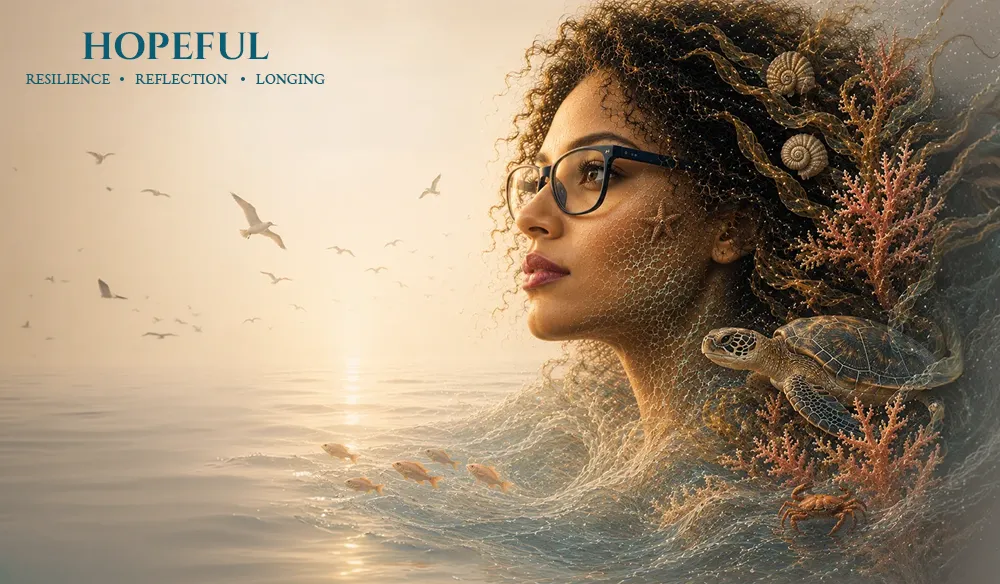
HOPEFUL
Resilience • Reflection • Longing
Hope does not always arrive in daylight. Sometimes it comes after grief, when the damage is still visible and the future is not yet clear. One image expresses hope through openness, light, and renewal: A quiet belief that something better lies ahead. The other finds hope in darkness. After heartbreak and environmental loss, she remains standing, gathering resolve and choosing to believe that change is still possible. In both, hope is not passive. It is the decision to continue.
Possible Applications and Formats
The series developed enough visual range to support both expressive art and practical communication. The illustrative, cinematic, and minimalist directions each suggest different applications.
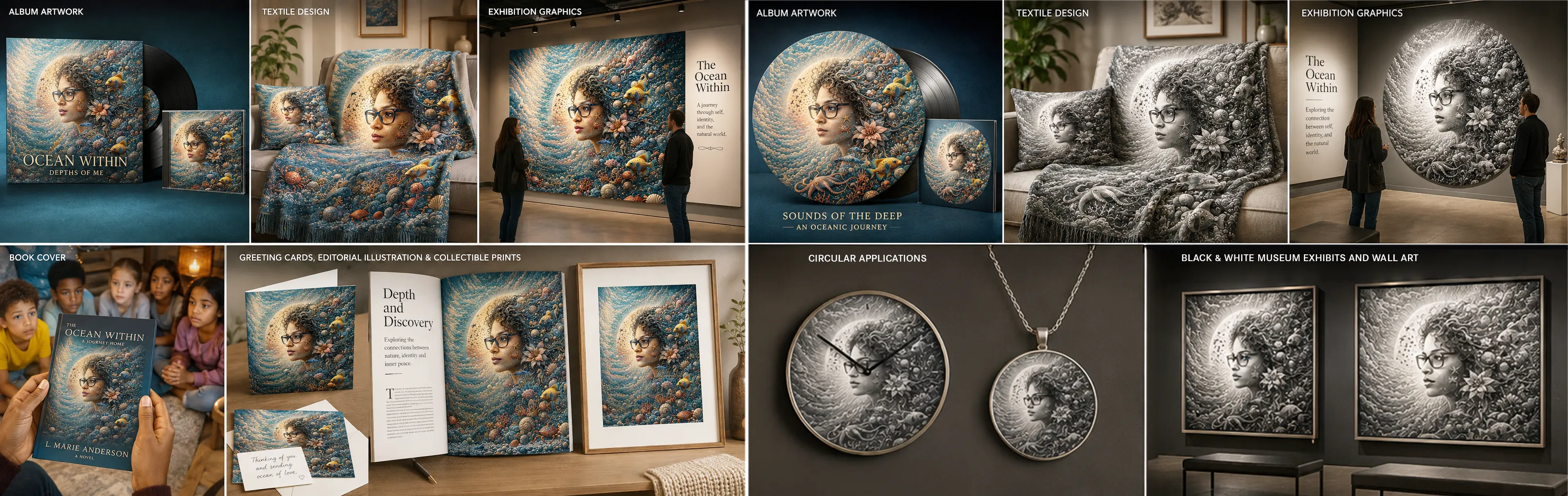
Illustrative and Painterly Applications:
Fantasy and literary book covers, children’s and young-adult publishing, album artwork, cultural storytelling, editorial illustration, collectible prints, greeting cards, textile design, and exhibition graphics.
Cinematic-Fantasy Applications:
Film posters, streaming key art, romance and fantasy novels, magazine covers, environmental campaigns, tourism and destination marketing, museum exhibits, prestige editorial features, and gallery-scale prints.
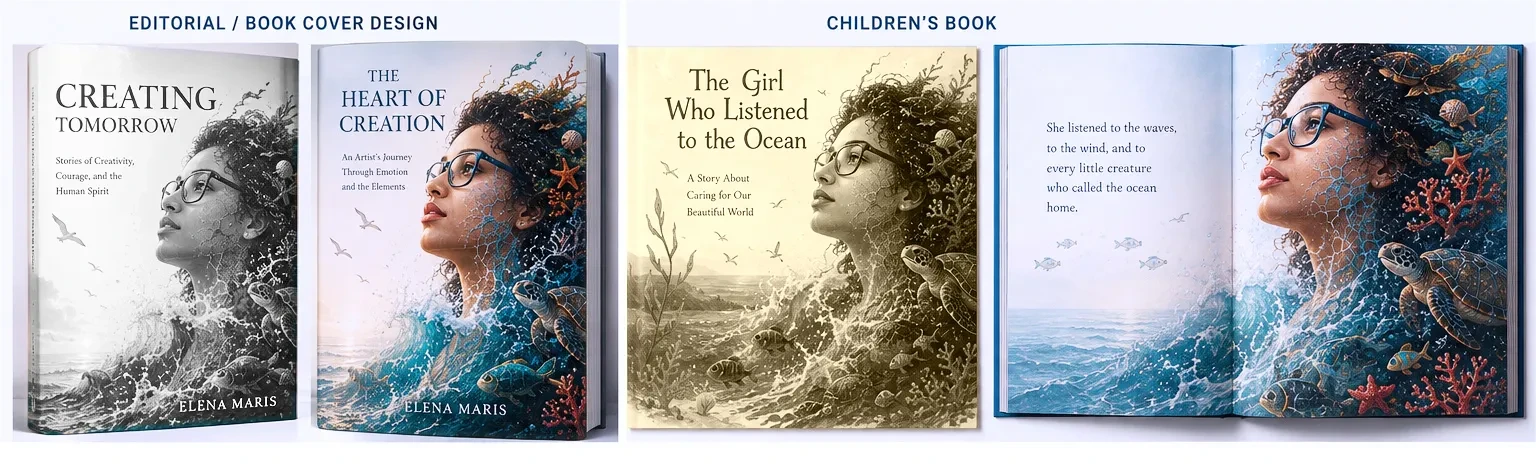
Elegant Minimalist Applications:
Luxury editorial covers, wellness and hospitality environments, healthcare spaces, beauty campaigns, high-end book jackets, corporate lobbies, restorative public art, and premium travel branding.
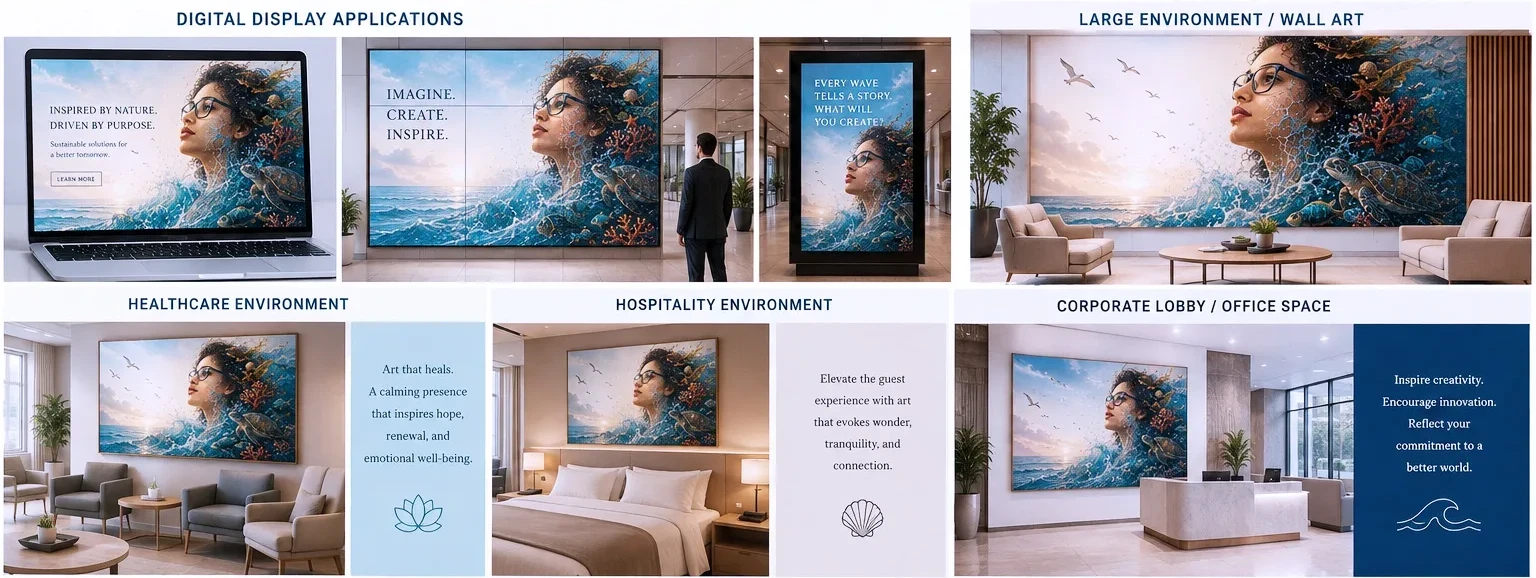
Suggested dimensional studies:
Possible Application: Luxury Residential & Real Estate Staging
Presented at scale, The Ocean Within can anchor high-end interiors as statement artwork, whether used as a single focal piece or as a coordinated series.
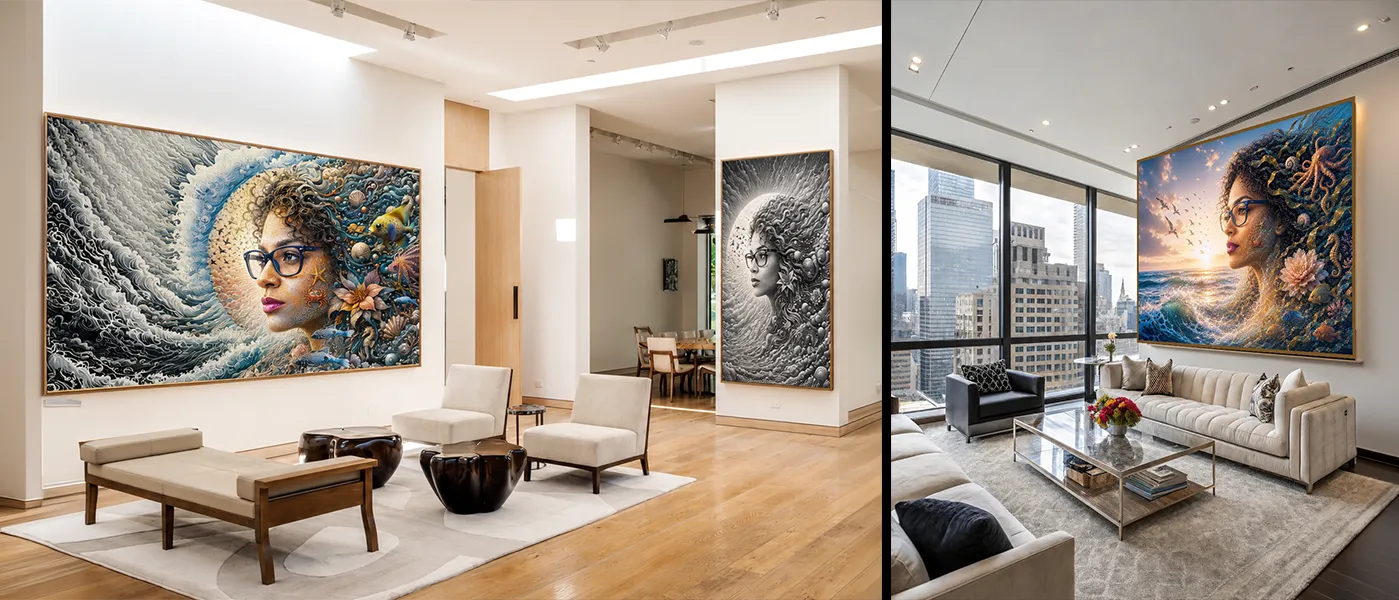
Suggested Scale: 60 × 40 in. to 96 × 64 in., depending on placement and architectural setting.
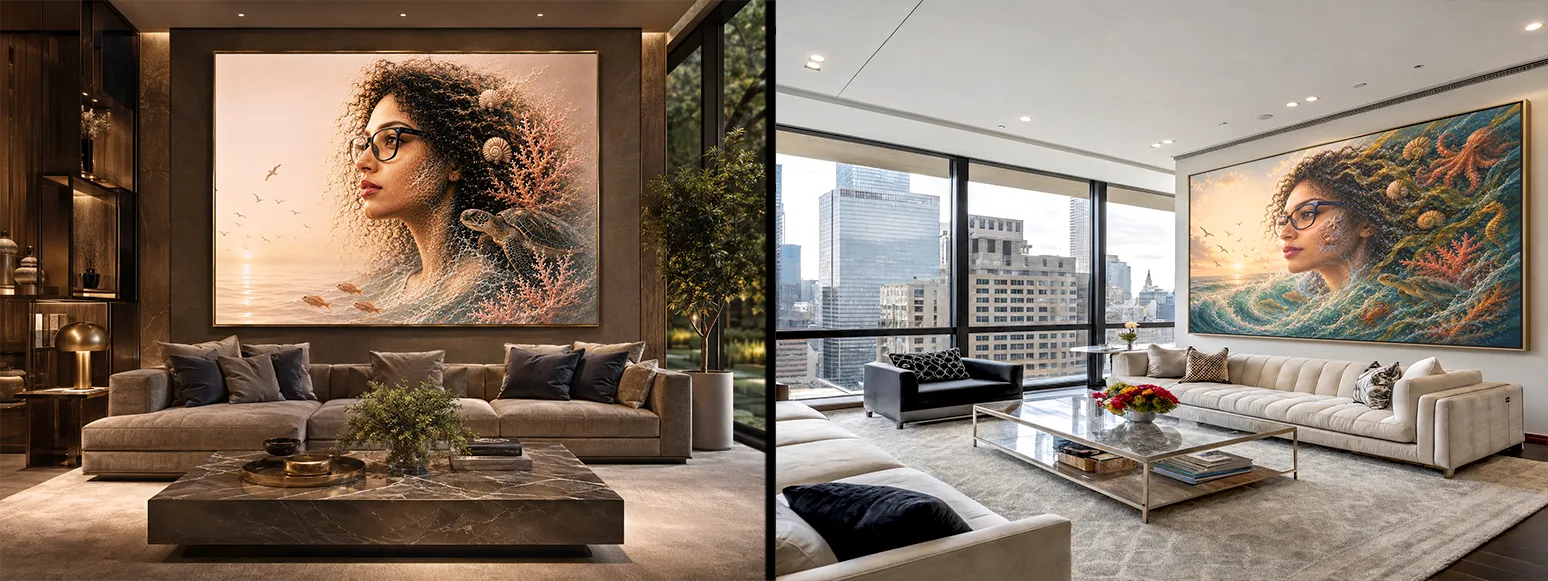
Possible Application: Interior Art, Hospitality & Private Commissions
From warm, intimate environments to bright contemporary spaces, the series demonstrates how custom artwork can be adapted to different palettes, moods, and architectural settings.
The long landscape format offers a different kind of value. In a busy airport or public corridor, a quiet image such as Optimism could create a brief pause: A moment of calm, reflection, and forward movement within a crowded environment.
Reflection
The strongest results did not come from the strongest prompt. They came from the willingness to question every decision, recognize what was failing, explain why, and continue refining until the work communicated exactly what I intended.
This process reinforced the difference between generating and directing. AI supplied possibilities. I determined which possibilities belonged, which needed to change, and which had no place in the composition. The final series reflects not only my connection to the ocean, but the way I think: Layered, observant, persistent, and unwilling to confuse complexity with clutter.
The ocean has always felt like home to me. This series imagines what it would look like if home lived within us—shaping our thoughts, carrying our emotions, and becoming the worlds we create.
What This Work Demonstrates
Creative Direction
Transforming unpredictable AI outputs into a cohesive visual series through precise critique, selection, and repeated art direction.
Identity Preservation
Maintaining facial likeness, natural complexion, expression, and personal identity while the surrounding style and emotional narrative changed.
Visual Storytelling
Using waves, weather, light, wildlife, pollution, color, and negative space to turn emotional states into distinct environmental narratives.
Hierarchy Within Complexity
Organizing richly layered imagery so the face remains the focal point and every supporting element contributes without becoming clutter.
Cross-Format Thinking
Developing a visual language flexible enough for fine-art prints, book covers, editorial work, environmental installations, and cinematic banners.
Human Judgment Over Automation
Demonstrating that the value of AI-assisted work lies not in speed or volume, but in the quality of the decisions shaping the final result.
The Impact
The Ocean Within grew from a single personal experiment into a fully art-directed visual series with its own emotional language, design principles, and range of possible applications.
The project demonstrates that meaningful AI-assisted work is not defined by the number of images generated or the complexity of a prompt. It is defined by observation, judgment, persistence, and the ability to recognize when an attractive image still fails the idea.
Most importantly, the series became a visible record of how I think as an art director: Protecting identity, establishing hierarchy, creating flow, removing noise, and pushing every element to earn its place until the work feels intentional, emotionally resonant, and complete.